TLDR
Software Engineer Salary by State 2026: The Complete Breakdown You Actually Need — Ever wondered which state pays you what, and why?
In the next 100 words, you’ll get a jaw-dropping snapshot: top-paying metros, hidden low-tax gems, and the surprising places where remote-first companies boost base pay.
No fluff — just the comparisons, trade-offs, and action steps that turbocharge your salary decisions.
Ready to choose cities that maximize take-home pay, negotiate with data, or plan a strategic move?
This guide arms you with state-level figures, cost-of-living context, and negotiation ammo so you can turn market intel into a bigger paycheck—fast.
Are You Actually Getting Paid What Your State Should Be Paying You?
If you are a software engineer comparing a job offer right now, or you are sitting in your current role wondering if you are being underpaid, this guide is exactly what you need.
I have pulled verified data from the Bureau of Labor Statistics, Salary.com, ZipRecruiter, Glassdoor, and Levels.fyi to give you a clear picture of what software engineers are earning state by state in 2026.
The difference between the highest paying state (California at $173,780 average) and the lowest paying market (Mississippi at $86,460 median) is nearly double. That is not a small gap. That is a career decision.
But here is what most salary articles miss: the state with the biggest number on paper is not always the state where you end up with the most money in your pocket. State income tax, cost of living, and remote work opportunities all reshape the real picture.
National Average Software Engineer Salary in 2026
The numbers vary depending on where you look, and there is a good reason for that. Different platforms measure different things.
The Bureau of Labor Statistics OEWS data puts the national median at $130,160 for software developers and engineers. Glassdoor reports an average of $148,764. ZipRecruiter comes in at $147,524. Salary.com sits around $124,205.
The variance exists because BLS uses survey-based employer data, while platforms like Glassdoor and ZipRecruiter pull from self-reported compensation and active job postings.
For most purposes, the practical benchmark to use is $125,000 to $150,000 as the national range for a mid-level software engineer with three to six years of experience.
Entry-level starts around $75,000 to $92,000, and senior engineers clear $140,000 to $185,000 in base pay alone.
The BLS also projects a 15% to 25% job growth rate for software engineers through 2034, which is significantly faster than the average across all occupations.
Demand is not slowing down, and that sustained demand is a key reason salaries keep rising year over year.

Software Engineer Salary by State: Full 2026 Table
The table below covers 22 key states with average salary, entry-level base, mid-level base, and state income tax rate. Data sourced from Salary.com (April/May 2026), BLS OEWS, and ZipRecruiter as of May 2026.
| State | Avg Salary | Entry-Level | Mid-Level | State Tax |
| Texas | $121,150 | $81,233 | $129,239 | No State Tax |
| Florida | $117,523 | $78,802 | $125,370 | No State Tax |
| Georgia | $119,796 | $80,326 | $127,794 | 5.49% |
| Virginia | $125,074 | $83,865 | $133,425 | 5.75% |
| Washington | $159,990 | $90,000+ | $166,910 | No State Tax |
| Colorado | $126,726 | $84,973 | $135,188 | 4.40% |
| Michigan | $122,317 | $82,016 | $130,484 | 4.25% |
| Ohio | $120,938 | $81,092 | $129,013 | 3.99% |
| Illinois | $126,602 | $84,890 | $135,055 | 4.95% |
| Pennsylvania | $123,646 | $82,907 | $131,902 | 3.07% |
| North Carolina | $118,032 | $79,143 | $125,913 | 4.50% |
| Tennessee | $116,070 | $77,827 | $123,819 | No State Tax |
| Arizona | $121,025 | $81,150 | $129,106 | 2.50% |
| Utah | $118,939 | $79,751 | $126,880 | 4.55% |
| Oregon | $126,130 | $83,000 | $134,552 | 9.90% |
| Louisiana | $118,094 | $79,185 | $125,979 | 4.25% |
| South Carolina | $116,380 | $78,035 | $124,151 | 6.40% |
| Wisconsin | $122,180 | $81,925 | $130,338 | 7.65% |
| Missouri | $118,007 | $79,126 | $125,886 | 4.80% |
| Minnesota | $127,099 | $85,223 | $135,585 | 9.85% |
| Nevada | $122,926 | $82,424 | $131,133 | No State Tax |
| California | $173,780 | $100,000+ | $170,910 | 13.30% |
Highest Paying States for Software Engineers in 2026
Five states consistently sit at the top when you look at raw base salary numbers. Here is what drives each of them.
California
California leads the country with an average software developer salary of $173,780 according to BLS data, with median figures around $170,910. Silicon Valley and the San Francisco Bay Area remain the center of gravity for Big Tech, with San Jose developers averaging $180,320 per year.
The tradeoff is a 13.3% state income tax and housing costs that can easily run $3,000 to $4,500 per month for a one-bedroom in major metros.
For a detailed look at the Los Angeles market specifically, see our guide to
software engineer salary in Los Angeles
Washington
Washington pays software developers a mean salary of $159,990, placing it second nationally. Microsoft and Amazon are headquartered here, which creates exceptional demand for backend engineers, cloud developers, and DevOps specialists.
The real advantage is that Washington has no state income tax. A $155,000 salary in Seattle nets more take-home pay than a $165,000 salary in California after state taxes.
For a detailed breakdown of the Seattle market, read our
software engineer salary in Seattle, WA guide
Washington state engineers are also covered in our
software engineer salary Washington guide
New York
New York averages $150,020 for software developers, driven by a strong fintech, startup, and enterprise software ecosystem in New York City. Salary.com puts the broader software engineers figure at around $139,000 to $145,000 statewide.
The 10.9% top marginal state income tax is a significant offset, but the density of Big Tech offices, hedge funds, and high-growth startups keeps total comp packages competitive.
Maryland
Maryland comes in at $150,740 average, boosted by proximity to Washington D.C. and a high concentration of government tech, defense contractors, and federal IT roles.
Cybersecurity is particularly well compensated here given the density of agencies like NSA, CISA, and DoD contractors in the region.
Massachusetts
Massachusetts averages $146,580, powered by Boston’s biotech, healthcare technology, and financial services sectors. The presence of MIT, Harvard, and a dense startup ecosystem keeps demand for full stack engineers and backend developers high.
Mid-level professionals here earn $135,188 on average according to Salary.com 2026 data.
Growing Tech State Markets Worth Watching
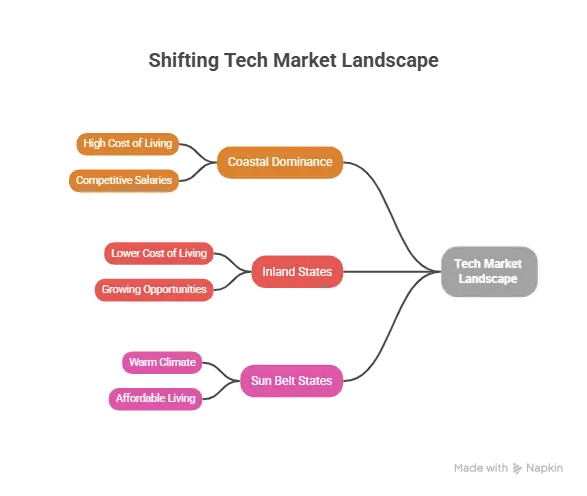
The coastal dominance story is shifting. Several inland and Sun Belt states are becoming legitimate alternatives for software engineers who want competitive salaries without the coastal cost burden.
Texas
Texas averages $121,150 in base salary per Salary.com 2026 data, with Austin leading as the state’s primary tech hub followed by Dallas-Fort Worth. The real story here is purchasing power.
A software engineer making $120,000 in Austin takes home more disposable income than someone making $155,000 in San Francisco after accounting for housing, no state income tax, and general cost of living.
Senior engineers in Austin range from $115,000 to $145,000 in base pay, with total comp packages approaching $200,000 at mid-sized tech firms.
See our full
software engineer salary in Austin guide
For San Antonio and other Texas markets, our
software engineer salary San Diego guide
covers comparable Sun Belt market dynamics.
Georgia
Georgia averages $119,796 according to Salary.com 2026, with Atlanta functioning as the primary tech market. The city has grown substantially as a financial technology hub, with companies like NCR, Global Payments, and a strong startup scene.
Entry-level software engineers in Georgia start around $80,326 and mid-level professionals earn up to $127,794. See our full
software engineer salary in Atlanta guide
Florida
Florida averages $117,523 statewide with Miami and Tampa as the main tech centers. Florida has no state income tax, which adds real take-home value on top of already competitive base salaries. Miami has seen significant fintech and crypto company growth over the past three years.
Entry-level engineers start around $78,802, and mid-level ranges sit around $125,370. For specific Miami market data, see our
software engineer salary in Miami guide
Colorado
Colorado averages $126,726 per Salary.com 2026, with Denver and Boulder anchoring the market. The state has a well-developed startup scene and attracts talent from coastal markets looking for outdoor lifestyle benefits.
Mid-level engineers here average $135,188. The state income tax is a modest 4.4%.
Virginia
Virginia sits at $125,074 average, propelled by Northern Virginia’s massive government technology and cloud infrastructure cluster. Amazon Web Services has its headquarters here, and the region hosts more data centers than any other area in the world.
Senior engineers with security clearances command significant premiums above the state average.
Software Engineer Salary by Experience Level in 2026
Your experience level is the single largest predictor of your salary range, more than your state in many cases. Here is the full breakdown across all levels, from entry to principal engineer.
| Experience Level | Base Salary Range | Total Comp (FAANG) | Common Titles |
| Entry-Level (0-2 yrs) | $75,000 – $92,000 | $78,000 – $100,000 | SWE I / Junior Dev |
| Mid-Level (3-5 yrs) | $100,000 – $140,000 | $107,500 – $144,050 | SWE II / Developer |
| Senior (6-9 yrs) | $140,000 – $185,000 | $160,000 – $225,000 | Sr. Engineer / L5-L6 |
| Staff Engineer (10+ yrs) | $160,000 – $220,000+ | $250,000 – $400,000+ | Staff / Principal Eng. |
| Principal / Lead | $180,000 – $250,000+ | $300,000 – $700,000+ | Principal / L7+ |
Entry-Level Software Engineer (0 to 2 Years)
Most entry-level software engineers in the US start between $75,000 and $92,000 in base salary. At FAANG companies like Google and Meta, new grads with strong skills receive total compensation packages of $140,000 to $188,000 when sign-on bonuses and initial RSU grants are included.
States like California and Washington offer entry-level starting points above $90,000 to $100,000 base, while markets like Tennessee, South Carolina, and Louisiana start around $76,000 to $78,000. The $75 to $85 per hour hourly rate equivalent applies for contract roles at the entry level.
Mid-Level Software Engineer (3 to 5 Years)
Mid-level is arguably the most in-demand tier in the current job market. These engineers, often titled SWE II, Software Developer, or Full Stack Engineer, earn $100,000 to $140,000 in base salary nationally.
Salary.com’s mid-level data for 2026 shows Texas at $129,239, Virginia at $133,425, and Colorado at $135,188 for this tier.
The jump from entry to mid-level is typically 20 to 35%, and it often comes faster by switching employers than by waiting for an annual raise cycle.
Senior Software Engineer (6 to 9 Years)
Senior engineers earn $140,000 to $185,000 in base salary across most markets. Glassdoor puts the average senior software engineer salary at $202,720 as of March 2026, with top earners reaching $315,608.
At FAANG specifically, senior engineers at Meta average $380,000 in total comp and Google’s senior level averages $302,000 according to Levels.fyi data.
This is the level where total compensation starts to seriously diverge from base salary. RSU grants, annual cash bonuses, and sign-on bonuses can double or triple base pay at top employers.
Staff and Principal Engineers (10+ Years)
Staff engineers earn $160,000 to $220,000 in base salary, with total comp at FAANG reaching $400,000 to $700,000+ when equity is included.
Principal and distinguished engineers sit above that, with base salaries regularly exceeding $220,000 at major tech companies.
These roles require cross-team technical leadership, architectural ownership, and in many cases the ability to drive company-wide engineering decisions. The compensation at this level reflects that scope of impact.
Total Compensation vs. Base Salary: What You Are Actually Being Offered
This is where most job seekers get confused, and it costs them real money.
Base salary is the number on your offer letter. Total compensation is what you actually earn when you add base salary, annual cash bonus, RSU (restricted stock unit) grants, sign-on bonus, and the value of benefits like 401k matching.
Here is a concrete example. A mid-level engineer at a Big Tech company in Seattle might see an offer like this: $160,000 base, $40,000 annual bonus target, $240,000 in RSUs vesting over four years ($60,000 per year), and a $30,000 sign-on bonus. That is $290,000 in total first-year compensation, not $160,000.
RSU vesting schedules matter. The standard four-year vest with a one-year cliff means you get 25% of your stock grant after year one, then monthly or quarterly thereafter.
If you leave before the cliff, you walk away with nothing from the equity. This is exactly why FAANG companies structure packages this way.
For hourly rate context: the national average software engineer hourly rate sits at $70.92 per ZipRecruiter May 2026 data, with entry-level contractors around $36 to $46 per hour and senior engineers clearing $90 to $120 per hour on contract.
See detailed hourly rate breakdown
No-Tax States: The Hidden Pay Raise in 2026
This angle is underrepresented in most salary guides, and it is one of the most impactful factors in your actual take-home pay.
Nine states have no state income tax: Texas, Florida, Washington, Nevada, Tennessee, Wyoming, South Dakota, Alaska, and New Hampshire.
For a software engineer earning $130,000 per year, moving from California (13.3% marginal rate) to Texas (0%) is worth roughly $10,000 to $15,000 per year in additional take-home pay, without changing employers or roles.
Oregon, Minnesota, and California sit at the other extreme with state income tax rates of 9.9%, 9.85%, and up to 13.3% respectively.
An Oregon software engineer earning $126,130 may take home less than a Texas engineer earning $121,150 once state taxes are applied.
This is why Tennessee and Nevada, despite average salaries below the national median in nominal terms, are increasingly popular destinations for tech talent relocating from high-tax coastal markets.
Cost of Living Adjusted Salary: What Your Pay Actually Buys
According to research from Wealthvieu and RelocateRight, when you adjust for cost of living using regional price parities, the salary rankings shift meaningfully.
Washington state engineers earning $166,910 median see that translate to approximately $153,746 in purchasing power.
California’s $170,910 median drops to roughly $151,811 after COLA adjustment. Washington wins on real value despite lower nominal pay.
Texas and Georgia consistently rank high in cost-adjusted terms. North Carolina ($131,000 median, $139,156 COLA-adjusted) and Texas ($130,500 median, $134,294 adjusted) both outperform their nominal ranking when housing costs and general cost of living are factored in.
The practical takeaway: do not just compare base salary numbers across states. Compare what that salary will actually support in terms of housing, transportation, and savings rate in each specific market.
Remote Work Salary Arbitrage: The Real Salary Story of 2026
This is the section most salary articles skip, and it is where the smartest compensation decisions are being made right now.
Remote work has compressed geographic salary premiums from 40 to 45% in 2022 down to roughly 15 to 20% in 2026.
But engineers who are employed by high-paying coastal companies while living in low-cost states have created a significant financial advantage.
An engineer earning $300,000 at a San Francisco-based company while living in Austin, where the cost of living is roughly half of SF, effectively has the purchasing power equivalent of $450,000+ in San Francisco terms. This arbitrage is real and it is documented.
Companies like Stripe and GitLab maintain location-agnostic pay bands. Others, including Google and Meta, apply geographic adjustments that reduce base salary for engineers outside of designated high-cost metros. If your employer adjusts for location, the arbitrage narrows.
If they do not, you are playing the compensation game on an entirely different level than your peers.
For engineers considering this path, check the top companies that maintain national pay bands on our
top software engineering companies guide
What Actually Moves Your Software Engineer Salary
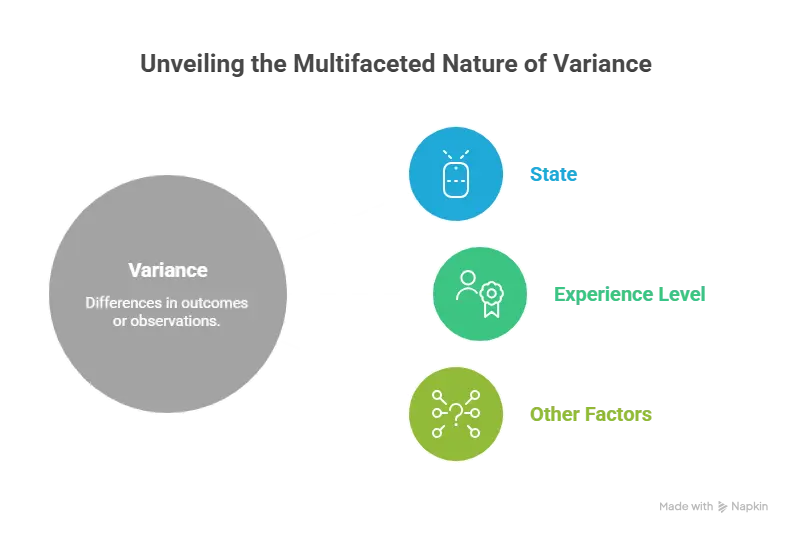
State and experience level explain most of the variance, but several other factors make a meaningful difference.
Specialization
ML and AI engineers command a 35% to 44% premium over generalist software engineers in 2026, and that gap is widening. Cloud and distributed systems specialists see a 15% premium. Security engineers earn 12% above baseline.
QA and SDET roles typically earn 20 to 25% less than full stack or backend engineers at the same experience level.
Employer Type
FAANG companies (Meta, Google, Apple, Amazon, Netflix) pay 60 to 100% above market rate when total comp is counted. That premium has narrowed since 2022 as mid-tier tech companies compete harder for talent, but the gap is still substantial.
Startups at Series A or B may offer lower base salaries with meaningful equity that could be worth nothing or a large multiple of base depending on exit outcome.
Education vs. Experience
A bachelor’s degree in computer science still opens doors, particularly at larger employers. But in 2026, a portfolio of shipped products, open source contributions, or measurable engineering impact increasingly outweighs degree credentials at mid-level and above.
Bootcamp graduates with two to three years of real production experience regularly earn in the $100,000 to $130,000 range nationally.
Role Type
Backend engineers and full stack engineers generally earn above the median software developer salary. Frontend engineers with strong React, TypeScript, or Next.js depth sit close behind.
DevOps and site reliability engineers (SRE) earn well above average due to on-call responsibilities and infrastructure criticality.
See top software paying jobs by role type
Salary Growth Timeline: Year 0 to Year 10 and Beyond
This is what realistic compensation growth looks like for a software engineer in the US, based on aggregated 2026 data from Glassdoor, Hakia, and Levels.fyi.
Year 0-1 (Entry Level): $75,000 to $100,000 base. Focus on shipping real code, getting code reviewed, and building depth in one or two areas. Your level at hire matters more than most engineers realize.
Year 2-3 (Junior to Mid Transition): $95,000 to $125,000. This is often where switching employers provides a faster salary jump than staying put. Internal promotion cycles typically lag market rates by 12 to 18 months.
Year 4-6 (Mid-Level): $115,000 to $145,000. You are now producing independently on complex systems. Total comp at top employers starts to diverge significantly from base. RSU refreshes begin to matter.
Year 7-9 (Senior Engineer): $145,000 to $185,000 base. This is where many engineers stay for a long time, and it is a financially rewarding place to be. Senior roles at FAANG carry total comp of $200,000 to $350,000+.
Year 10+ (Staff/Principal): $165,000 to $250,000+ base. Cross-team influence, architectural ownership. Total comp at large tech companies regularly reaches $400,000 to $700,000+ including equity.
What accelerates growth: changing employers every two to three years at key transition points, specializing in high-demand areas like ML infrastructure or distributed systems, and negotiating level at hire rather than just salary.
What slows it: staying at one employer through full vesting cliffs without competing offers, accepting a level below your actual experience at hire, and ignoring equity negotiation.
Common Misconceptions About Software Engineer Salaries by State
Myth 1: California always wins. In nominal terms, yes. In real purchasing power after taxes and housing, Washington state and Texas frequently deliver more take-home income for the same nominal compensation. The after-tax, after-rent number is the one that actually matters.
Myth 2: Remote work eliminated geographic pay differences. Geographic premiums narrowed from 40% down to 15 to 20%, but they did not disappear. San Francisco, New York, and Seattle still pay more than Nashville or Phoenix even for remote roles with the same employer.
Myth 3: Entry-level engineers should accept the first number offered. According to Hakia and Levels.fyi negotiation data, effective salary negotiation adds $10,000 to $50,000 to an offer, even at the entry level. Companies expect counteroffers. Signing bonuses and RSU grants are often more negotiable than base salary.
Myth 4: A higher salary always means more money. Equity vesting schedules, 401k matching, health insurance value, and remote work flexibility all affect total compensation. An engineer at a mid-tier employer with 100% remote and full benefits may net more financially than a FAANG engineer on-site in San Francisco with the same base.

When to Stop Researching and Start Negotiating
There is a point where more research is just delay. If you have your state data, your experience level range, and a real offer in hand, you have enough to negotiate.
1. Use Levels.fyi before every tech company negotiation. This platform aggregates actual verified compensation data by company, level, and location. It is the most accurate tool available for FAANG and major tech offers.
2. Always counter base and equity together. If the company will not move on base, ask for a larger RSU grant or a higher sign-on bonus. The total comp is what matters, not any single line item.
3. Competing offers are the most effective leverage. Even if you prefer Company A, an offer from Company B at $20,000 more is a negotiation tool. Most companies will meet or beat a competing offer rather than lose a candidate they have already invested in.
4. Negotiate your level at hire. Getting leveled one band higher at hire is worth more over a four-year period than almost any base salary negotiation. A level bump means a higher base ceiling, larger RSU grants, and faster promotion timelines.
Frequently Asked Questions
-
What is the highest paying state for software engineers in 2026?
California leads with an average software developer salary of $173,780 per BLS data, with median figures around $170,910. San Jose is the top-paying metro at $180,320. However, when adjusted for state income tax and cost of living, Washington state often delivers more actual purchasing power due to its 0% state income tax.
-
What is the average software engineer salary in the US in 2026?
The national median sits at $130,160 per BLS OEWS data. Glassdoor reports $148,764, ZipRecruiter shows $147,524, and Salary.com puts the figure at $124,205. The variance exists because each platform uses different methodologies. The practical working range is $125,000 to $150,000 for a mid-level engineer nationally.
-
Which states have no income tax for software engineers?
Texas, Florida, Washington, Nevada, Tennessee, Wyoming, South Dakota, Alaska, and New Hampshire have no state income tax. For a software engineer earning $130,000 per year, this is worth $8,000 to $15,000 in additional take-home pay annually compared to high-tax states like California or Oregon.
-
How much does a senior software engineer make by state?
Senior software engineers earn $140,000 to $185,000 in base salary nationally. California and Washington offer the highest senior base salaries, often $160,000 to $225,000 depending on employer. At FAANG companies, total comp for senior engineers ranges from $200,000 to $380,000+ including RSUs and bonuses.
-
Is software engineer salary in Texas competitive with California?
Texas averages $121,150 in base salary compared to California’s $173,780, a nominal gap of roughly $52,000. However, California’s 13.3% state income tax, housing costs, and general cost of living significantly close that gap in real purchasing power terms. Many engineers find Texas delivers more disposable income on a $120,000 salary than California on a $155,000 salary.
-
What is the entry-level software engineer salary by state?
Entry-level salaries range from $77,827 in Tennessee to $100,000+ in California and Washington per Salary.com 2026 data. The national entry-level average sits around $83,282. Colorado, Virginia, and Illinois all start entry-level engineers above $82,000. ZipRecruiter reports a national entry-level average of $104,863 as of May 2026, reflecting active job posting data skewing slightly higher.
-
Does remote work change software engineer salary by state?
Yes, but it did not eliminate geographic differences. Remote work compressed state-level salary premiums from 40 to 45% down to 15 to 20% in 2026. Engineers working remotely for coastal companies while living in low-cost states get the best of both worlds, earning higher nominal pay while spending less on housing and paying lower or no state taxes.
Share Your Experience
If you are a software engineer and your actual salary does not match what you see in your state’s range here, I would genuinely like to hear about it.
Whether you negotiated a great offer, got an unexpected lowball, or landed a remote role with a major salary arbitrage play, your experience adds context that no data set fully captures. Drop your story in the comments below.
How This Article Was Created
All salary figures in this article were sourced from publicly available compensation platforms and research databases. No numbers were fabricated or estimated without a named source.
Primary data sources: Bureau of Labor Statistics Occupational Employment and Wage Statistics (OEWS, 2024 release), Salary.com (April to May 2026 data), ZipRecruiter (May 2026 active job data), Glassdoor (March 2026), Levels.fyi (2025 End of Year Pay Report), Hakia Software Engineer Salary Guide 2026, and RelocateRight Best States for IT Jobs 2026.
Data range: BLS OEWS figures reflect May 2024 survey data (the most recent release available as of publication).
Platform data from Glassdoor, ZipRecruiter, and Salary.com reflects Q1 to Q2 2026 active listings and reported compensation.
This article was written to help software engineers make informed career and salary decisions. It is not affiliated with any employer, recruiting firm, or compensation platform. No advertiser influenced the content or data selection.

Shahzada Muhammad Ali Qureshi (Leeo)
I’m Shahzada — a software engineer by education and an SEO professional by trade. I built WhatIsTheSalary.com to go beyond just showing salary numbers — every page is manually researched across sources like BLS, Glassdoor, LinkedIn Salary, and PayScale to give you the full picture in one place. If you found what you were looking for here, that’s exactly the point.