TL;DR
Highest paying software jobs in the US aren’t just well-paid — some cross $300,000 in total compensation before you even factor in equity and bonuses.
Yet most developers are stuck in roles that underpay them by $40K to $80K simply because they don’t know which titles, skills, or industries actually move the needle on salary — and a few minutes on whatisthesalary.com is often enough to realize exactly how much you’ve been leaving on the table.
Here’s the fix: this guide breaks down exactly which software roles sit at the top of the pay scale in 2026, what each one realistically pays, and what separates the engineers clearing $200K+ from those plateauing at average. No fluff, just the data and direction you need to make a smarter career move.
Why Software Engineering Pays So Well Right Now
Let’s be honest — the gap between software salaries and almost every other profession is not an accident. One look at IT salaries across roles and specializations makes it clear just how deliberately this industry rewards the right skills.
It comes down to simple supply and demand. Roles like Machine Learning Engineer and Site Reliability Engineer have far fewer qualified professionals than open positions, and companies know it. When your skill set directly impacts revenue, scalability, or security at scale, the compensation reflects that.
Overall employment in computer and information technology occupations is projected to grow much faster than the average for all occupations from 2024 to 2034, with about 317,700 openings projected each year on average. The median annual wage for this group was $105,990 in May 2024 — more than double the median wage for all occupations of $49,500.

A projected 15 percent expansion in U.S. software jobs by 2034, combined with over 100,000 openings every year and six-figure median pay, places software among the most stable, scalable, and financially rewarding career paths available today.
But median figures only tell part of the story. The real money — especially for senior engineers at top tech companies — sits well above those benchmarks. We’re talking total compensation (TC) packages that include base salary, equity (RSUs), and performance bonuses. That’s the number that actually matters.
Top 15 Highest Paying Software Jobs in the US (2026)
Here’s a ranked breakdown of the roles commanding the most total compensation in 2026, based on data from Levels.fyi, BLS, and industry reports.
| # | Role | Median TC (US) | Top Companies | Key Skills |
|---|---|---|---|---|
| 1 | Principal / Distinguished Engineer | $650K–$1.3M+ | OpenAI, Google, Meta | System design, leadership, architecture |
| 2 | Staff Software Engineer | $400K–$650K | Netflix, Google, Meta | Distributed systems, cross-team impact |
| 3 | ML / AI Engineer | $250K–$500K+ | Google, Meta, OpenAI | TensorFlow, PyTorch, LLMs |
| 4 | AI Research Scientist | $300K–$900K | Google DeepMind, OpenAI | Deep learning, publications, algorithms |
| 5 | Quantitative / Trading Software Engineer | $300K–$700K+ | Jane Street, Citadel, Two Sigma | Algorithms, low-latency systems, math |
| 6 | Big Data Engineer | $180K–$280K | Amazon, Databricks, Snowflake | Spark, Hadoop, Kafka |
| 7 | Cloud Architect | $180K–$270K | AWS, Microsoft Azure, GCP firms | Kubernetes, DevOps, Terraform |
| 8 | Blockchain Developer | $180K–$250K | Coinbase, Solana, Chainlink | Solidity, smart contracts, Web3 |
| 9 | Cybersecurity Software Engineer | $170K–$260K | CrowdStrike, Palo Alto, FAANG | Threat modeling, penetration testing |
| 10 | Site Reliability Engineer (SRE) | $180K–$280K | Google, Netflix, LinkedIn | Observability, incident response, SLOs |
| 11 | DevOps / Platform Engineer | $160K–$230K | Stripe, Atlassian, AWS | CI/CD, Docker, Kubernetes |
| 12 | Full Stack Engineer (Senior) | $150K–$220K | Startups, fintech, FAANG | React, Node.js, PostgreSQL |
| 13 | Software Architect | $170K–$250K | Enterprise tech, healthcare IT | Design patterns, API design, scalability |
| 14 | Data Scientist (AI-focused) | $150K–$300K | Amazon, Apple, Spotify | Python, ML pipelines, statistical modeling |
| 15 | Engineering Manager | $220K–$500K | Big tech, Series B+ startups | People management, roadmap, delivery |
Let’s look at the most important ones in more detail.
1. Principal / Distinguished Software Engineer
This is the role people are referring to when they ask “what engineer makes $500K+?” A principal engineer operates at the highest individual contributor level — setting architectural direction, unblocking entire org-wide efforts, and often influencing product strategy directly.
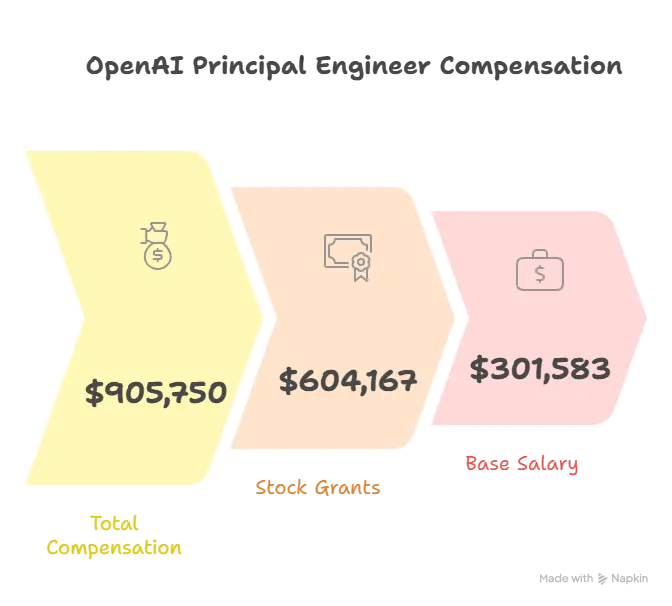
For a level 5 software engineer at OpenAI, the average base salary is $301,583 with an additional $604,167 in stock grants per year, bringing the average total compensation to roughly $905,750, according to Levels.fyi. At the distinguished engineer level (Google L9), the numbers are even more extreme.
You don’t get here overnight. This level typically requires 10–15+ years of deep technical experience, a track record of shipping systems that scaled across millions of users, and the ability to mentor and influence teams without formal authority.
2. ML / AI Engineer
Machine learning engineers design, train, and deploy models that power AI-driven applications. They work closely with data scientists and software teams to move algorithms from experimentation into production systems.
This is one of the fastest-growing high-pay roles in the market right now. Meta throws around $489,000 packages for AI research roles, while OpenAI pays up to $440,000 base salary for top researchers.
If you’re proficient in Python, PyTorch or TensorFlow, understand how to train and fine-tune LLMs, and can deploy models at production scale — you’re in a very small talent pool. Companies like Google, Meta, and OpenAI are competing hard for exactly that profile.
3. Quantitative / Trading Software Engineer
This is an underrated category that doesn’t get enough attention in most salary lists.
For entry-level quant roles at firms like Jane Street, salaries can be sky-high — Jane Street was reported to offer $325,000 for new-grad software and quant engineers. A mid-career AI quant in finance might earn $500K–$1M+ per year if they are generating profit for the firm.
These roles sit at the intersection of finance and engineering. You’ll write code that executes trades in microseconds, builds risk models, or processes market data in real time. The barrier to entry is high — most firms expect strong algorithmic thinking, top academic credentials, and the ability to pass notoriously difficult technical interviews.
4. Cloud Architect
Cloud architects are in high demand because almost every company uses the cloud and requires cloud architects to maintain and scale it. According to LinkedIn, cloud computing is the second most in-demand skill of 2026.
At mid-to-senior levels, cloud architects design infrastructure for global-scale systems — choosing between AWS, Azure, and GCP, designing multi-region redundancy, managing IAM policies, and ensuring cost efficiency. AWS, Azure, and GCP certifications noticeably bump earning potential here.
5. Blockchain Developer
This category is volatile — pay can fluctuate with crypto market cycles. But at peak demand, roles aligned with AI, cloud, and cybersecurity trends consistently rank among the top-paying software engineering jobs, and blockchain developers at funded Web3 companies and protocols like Solana or Coinbase can see total compensation well above $200K, sometimes with token upside on top.
Core skills needed: Solidity, Rust (for Solana), smart contract auditing, cryptographic fundamentals, and experience deploying on EVM chains.
Salary Breakdown by Experience Level (2026)
One of the most searched questions around software salaries is how experience translates to pay — and the data behind software engineer salary by experience lays it out more clearly than most job postings ever will. Here’s a realistic breakdown:
| Experience Level | Years | Typical Base | Bonus | Equity (Annual) | Total TC Range | Example Companies |
|---|---|---|---|---|---|---|
| Entry-Level (New Grad) | 0–2 yrs | $120K–$190K | 10–20% | $20K–$50K | $150K–$250K | Google, Meta, Amazon |
| Mid-Level | 3–5 yrs | $160K–$250K | 15–25% | $50K–$120K | $240K–$380K | Stripe, Airbnb, FAANG |
| Senior | 5–8 yrs | $200K–$320K | 20–30% | $100K–$250K | $350K–$600K | Netflix, Uber, Meta |
| Staff / Principal | 8–12 yrs | $280K–$400K | 25–40% | $200K–$500K | $500K–$900K | Google, OpenAI, Citadel |
| Distinguished / Fellow | 12+ yrs | $350K–$500K+ | 40%+ | $500K–$2M+ | $900K–$3M+ | Google L9+, Meta E9 |
A few important notes on these numbers:
Entry-level at top companies is shockingly competitive. An entry-level E3 software engineer at Meta sees average total compensation of $193,000. That’s more than most mid-level salaries at non-tech companies.
Engineers with 7–10 years of hands-on system design experience often double the average software engineer salary in the USA.
Equity (RSUs) is where the real wealth accumulates. At senior levels, annual equity grants at companies like Google, Meta, and Netflix can dwarf the base salary itself.
Top Paying Companies for Software Roles (2026)
Not all tech companies pay the same. The spread is enormous — and if you want the full picture before your next job search, highest paying companies for software engineers breaks down exactly who’s writing the biggest checks right now. Here’s how the top companies compare:
| Company | Avg SWE Total Comp | Standout Roles | Equity Notes |
|---|---|---|---|
| OpenAI | $556K (median) | AI/ML Engineer, Research Scientist | RSUs; new grad retention bonuses of $300K reported |
| $251K–$2.6M (by level) | Distinguished Engineer (L9) | 4-year vest, strong refreshes | |
| Meta | $193K–$3.25M (by level) | Staff/Principal SWE | E9 TC averages $3.25M |
| Netflix | $300K–$900K+ | Principal SWE, AI PM | Cash-heavy; minimal structured equity |
| Jane Street / Citadel | $325K+ (new grad) | Trading SWE, Quant Dev | High cash + bonus; performance tied |
| Microsoft | $168K–$1.12M (by level) | L69 Principal SWE | Heavy RSU vest |
| Apple | $152K–$1.54M (by level) | Distinguished Engineer | Strong RSU + ESPP |
Software Engineer compensation at OpenAI ranges from $249K per year for L2 to $1.24M per year for L6, with the median yearly compensation package totaling $556K.
In August 2025, OpenAI implemented significant retention bonuses for technical staff — new grads and new hires received $300K bonuses vesting over 2 years, with broader technical staff bonuses ranging from smaller amounts to $1.5 million for certain levels.
That last data point is remarkable. It reflects how intensely AI labs are competing for top talent right now.
Location & Remote Work: How Much Does It Matter in 2026?
Geography still moves the needle — but less than it used to, largely because remote software engineer salaries have closed a significant chunk of the location-based pay gap over the last few years.
| Location | Avg SWE TC | Cost of Living Note | Remote Premium? |
|---|---|---|---|
| SF Bay Area | $280K–$350K+ | High COL, ~25% premium | — |
| New York City | $240K–$300K | High COL, finance adjacency | $200K+ remote |
| Seattle | $230K–$290K | No state income tax | $190K+ remote |
| Austin / Texas | $190K–$250K | Lower COL; growing hub | Best remote ROI |
| Remote (US-based) | $160K–$280K | Varies widely | Growing closer to on-site |
Location still matters; Silicon Valley, New York, and Seattle offer higher base pay, while remote roles are increasingly closing that gap.
One thing worth noting: companies like Netflix and Stripe have largely moved to paying near-SF rates for remote engineers. Others, especially mid-stage startups, still apply geographic pay adjustments. Always ask during negotiations.
Specialized Niches With Outsized Pay
Beyond titles, certain technical domains consistently command premium salaries regardless of the specific role — exactly what the data on specialized software engineer salaries confirms across every major market right now.
AI / LLM Engineering: Working directly on large language model training, fine-tuning, or deployment infrastructure puts you in a very small talent pool. This is probably the single hottest niche in software right now. Demand for AI-based systems, data processing, software development, and associated consulting services are expected to drive the need for workers in both the professional, scientific, and technical services sector.
High-Frequency Trading Systems: Low-latency C++ or Rust work for trading infrastructure is niche but extremely well-compensated. Firms like Citadel, Virtu, and HRT pay among the best packages in software globally.
Financial Services SWE (Goldman, JPMorgan): Banks are quietly some of the best payers for software talent. Engineers building trading platforms, risk systems, or quantitative tools at Goldman Sachs or JPMorgan can see $250K–$350K TC without the brand recognition of FAANG.
Cybersecurity Engineering: With AI’s growth, companies are investing in AI-driven security systems, which is increasing the need for AI Security Specialists — professionals who develop machine learning models to detect cyber threats before they escalate.
Cloud Infrastructure at Scale: Engineers who’ve built and operated infrastructure at millions of QPS (queries per second) — think multi-region Kubernetes clusters, custom service meshes, observability stacks — are always in demand.
US vs. Global Software Salaries: The Gap Is Real
If you’re comparing US software salaries to global benchmarks, the difference is stark — a quick look at software engineer salary by country puts the gap into numbers that are honestly hard to ignore.
A senior software engineer in the US at a top company might earn $300K–$500K total compensation. The same level at a FAANG India office typically sees $80K–$120K, which is still significantly above local market rates but a fraction of US compensation.

Software Architects earn between ₹30 LPA to ₹50 LPA in India and $140,000 to $210,000 per year in the US.
That gap is one reason US-based remote work is so competitive. Engineers outside the US who can work for US-based companies (via Deel, Remote.com, or direct contractor arrangements) are increasingly doing so — though it’s still difficult to access top-tier FAANG salaries remotely from outside the US.
Key 2026 trend to watch: AI adoption is flattening some of the geographic advantage. As companies automate more junior-level tasks, they’re competing even harder for senior AI talent — wherever it lives.
2026 Salary Trends You Should Know
A few trends worth tracking if you’re in software or thinking about entering it — the latest software engineer salary trends and comparisons give you a solid data-backed starting point before we break them down here.
AI roles growing 25%+ YoY in job postings. Titles like “AI Engineer,” “LLM Engineer,” and “Prompt Engineer” have exploded. The underlying skill set (Python + ML fundamentals + systems thinking) transfers well from traditional SWE backgrounds.
Remote/hybrid pay is normalizing. Post-pandemic geographic pay adjustments are still around, but the spread between on-site SF pay and fully remote pay has shrunk significantly, especially at companies that went remote-first.
Equity is more important than ever — but riskier. OpenAI’s equity story has made headlines, but remember: pre-IPO RSUs can be worth nothing. Always evaluate cash compensation independently.
Specialization beats generalization for salary growth. Mastery of technical skills like Python, AWS, and Kubernetes can increase salaries by 20–30%. Companies prioritize engineers who can deploy, scale, and monitor production systems.
The “senior engineer plateau” is real. Many engineers stall at senior level (5–8 years). The jump to staff or principal requires more than good code — you need demonstrated cross-team impact, influence without authority, and strong technical writing/communication skills.
How to Actually Land These Roles (and Negotiate the Salary)
Knowing the numbers is half the battle. Here’s what actually moves the needle on landing high-TC offers:
For FAANG / Big Tech: LeetCode is non-negotiable. Focus on dynamic programming, graphs, and system design. Practice mock interviews, specifically targeting the level you’re applying for (senior vs. staff expectations differ significantly).
For AI startups (OpenAI, Anthropic, etc.): Projects and publications matter more than LeetCode. Contribute to open-source ML tools, write about what you’ve built, and build systems that show you can operate at the intersection of research and production.
For quant firms (Jane Street, Citadel): The interview process is closer to math olympiad than software engineering. Brush up on probability, statistics, combinatorics, and be ready for case studies.
On negotiation: Always use Levels.fyi data as your benchmark. Know your target total compensation, not just base salary. Get competing offers before negotiating — they’re your strongest leverage. And always ask about equity refresh grants separately from the initial offer.
One tactical tip most people miss: the difference between leveling (e.g., L5 vs. L6) can mean $100K+ in TC. Pushing for the right level during the offer stage is often more impactful than negotiating within a level.

Also read: Software Engineer Salary in New York City: 2026 Complete Guide
Frequently Asked Questions (FAQs)
-
What is the highest paying software job in the US in 2026?
The highest paying software role is typically Principal or Distinguished Software Engineer at top AI companies and big tech. Software Engineer compensation at OpenAI ranges up to $1.24M per year at L6, and Google’s L9 Distinguished Engineer has seen total compensation exceeding $2.6M including equity.
-
How much do ML Engineers make vs. Big Data Engineers?
ML Engineers typically earn more. A senior ML Engineer at a top company averages $280K–$500K+ in total compensation, while Big Data Engineers (Spark, Hadoop, Kafka specialists) typically sit in the $180K–$280K range. The gap reflects higher demand and smaller talent pool for ML roles.
-
What’s the entry-level salary at big tech in 2026?
Entry-level salaries at FAANG-tier companies are genuinely impressive. An entry-level E3 software engineer at Meta earns average total compensation of $193,000. At Google, entry L3 starts around $140K base with stock and bonuses pushing total comp past $185K–$220K.
-
Which companies pay software engineers the most?
OpenAI, Google, Meta, Netflix, and quant firms like Jane Street and Citadel are consistently at the top. The median yearly total compensation reported at OpenAI is $640,721, making it one of the highest-paying employers across all of tech.
-
What’s the maximum salary for a remote software engineer in the US?
Remote engineers in senior/staff roles at top companies can realistically earn $200K–$280K+ total comp. Some fully remote principal-level roles at Netflix and Stripe cross $400K. Remote pay at startups is more variable.
-
What software engineering skills increase salary the most in 2026?
Mastery of technical skills like Python, AWS, and Kubernetes can increase salaries by 20–30%. Beyond that, LLM fine-tuning experience, distributed systems design, and production ML deployment skills are the highest-value differentiators right now.
-
Is a CS degree required for these high-paying roles?
Less so than before — but for top-tier companies like Google and Jane Street, a strong academic background (CS, math, physics from a well-known university) still gives you an edge in initial screening. Many mid-tier tech companies and startups hire based on portfolio and skills alone.
-
How does software pay in the US compare to India?
The gap is significant. A senior software engineer in the US at FAANG earns $300K–$500K total comp. The same role at FAANG India (which pays well above Indian market rates) earns roughly $80K–$120K. The US advantage is structural — higher cost of living, stronger stock markets, and deeper demand.
Bottom Line
The ceiling for software engineering compensation in the US has never been higher — and 2026 is proving that point clearly. Whether you’re aiming for a $250K ML engineer role at a well-funded startup or positioning yourself for a principal-level role at OpenAI or Google, the data shows a clear path: specialize deeply, work on systems that matter, document your impact clearly, and negotiate with real data behind you.
The difference between a good offer and a great one often comes down to knowing the numbers — and now you do.

Shahzada Muhammad Ali Qureshi (Leeo)
I’m Shahzada — a software engineer by education and an SEO professional by trade. I built WhatIsTheSalary.com to go beyond just showing salary numbers — every page is manually researched across sources like BLS, Glassdoor, LinkedIn Salary, and PayScale to give you the full picture in one place. If you found what you were looking for here, that’s exactly the point.