TLDR
Software engineer portfolio — three words that can completely change your hiring odds in 2026.
Most engineers spend months sharpening their coding skills, then hand recruiters a two-page resume and hope for the best. The problem? Resumes look identical. Everyone has bullet points, everyone lists Python and React, and everyone claims they are a “team player.” You blend in before you even get a chance. “whatisthesalary.com“
A portfolio fixes that instantly. It turns your work into something a recruiter can actually see, click, and experience in real time. Instead of reading about what you built, they are using it. That shift from telling to showing is what gets you callbacks, interviews, and offers, while everyone else waits.
What Is a Software Engineer Portfolio?
A software engineer portfolio is a dedicated website that showcases your skills, projects, work history, and technical thinking. Think of it as your personal brand on the internet. Unlike a resume, which is a flat document, a portfolio lets you show live demos, working code, GitHub repositories, and real outcomes.
Before going deeper, it helps to clear up something people often mix up. A software engineer designs and builds large-scale systems with a focus on architecture and design principles. A software developer tends to build specific applications. A programmer typically writes code but may not own the full software lifecycle.
All three benefit from a portfolio, but the depth and focus will differ. For a full breakdown, check out this guide on software engineer vs software developer to know exactly where you fit.
In 2026, the job market is more competitive than ever. Hiring managers at top companies receive hundreds of applications for a single role. A well-built software engineering portfolio website does the talking before you even get on a call. It signals seriousness, skill, and initiative all at once.

Benefits of a Software Engineer Portfolio
You might be thinking: I already have a resume and a LinkedIn. Why do I need a portfolio too? Here is why it matters.
First, it makes you stand out. A portfolio lets recruiters see your work, not just read about it. According to a 2024 Stack Overflow Developer Survey, over 65% of developers who maintained an active software engineer portfolio website reported higher interview callback rates during job searches.
Second, it creates a single destination. Your GitHub, LinkedIn, resume, blog, and projects all live in one place. Recruiters do not have to hunt around. You are making their job easier, and that works in your favor.
Third, it allows progressive disclosure. A visitor can skim your homepage, dig into a project page, or read your full resume depending on how interested they are. That layered experience builds trust faster than any PDF.
For anyone mapping out this career path, understanding the full software engineer career path will show how a portfolio plays a role at every stage, from entry-level all the way to principal engineer.
Where to Host Your Portfolio
Choosing the right hosting platform depends on your technical comfort level, budget, and goals. Here is a comparison of the most popular options in 2026:
| Platform | Cost | Custom Domain | Best For | Difficulty |
| GitHub Pages | Free | Yes | Developers, open source | Easy |
| Netlify | Free / Paid | Yes | Static sites, JAMstack | Easy |
| Vercel | Free / Paid | Yes | React/Next.js projects | Easy |
| Webflow | Paid | Yes | Design-heavy portfolios | Medium |
| WordPress | Free / Paid | Yes | Blog + portfolio combo | Medium |
| .com / .dev Domain | Low cost | Yes | Full personal branding | Medium |
GitHub Pages is the go-to for most developers. It is free, integrates directly with your repositories, and signals that you actively use version control. Netlify and Vercel are excellent for more complex static sites, especially if you are building with React or Next.js.
If personal branding is a priority, a custom .com or .dev domain gives you the most professional look. Domains typically cost between $10 and $15 per year, which is well worth it for the credibility boost.
As for junior developers, yes, absolutely build a portfolio site. Even three solid projects with clean code and live demos will put you ahead of candidates who only submitted a resume. If you are starting from scratch, see how others have become a software engineer without a degree by leaning heavily on portfolio work.
What Should Go Inside a Portfolio Site?
A strong software engineer personal website does not need to be complicated. It needs to be clear, functional, and easy to navigate. Here is what every portfolio should include:

About / Bio Section
Write two to three short paragraphs about who you are, what you build, and what kinds of roles you are targeting. Keep it human and direct. Mention your tech stack, background, and what drives you. Avoid vague statements like “passionate problem solver.”
Skills and Tech Stack
List your programming languages, frameworks, tools, and platforms. Group them logically: frontend (React, Vue, TypeScript), backend (Node.js, Django, Spring), DevOps and cloud (AWS, Docker, Kubernetes), and databases (PostgreSQL, MongoDB, SQL). Only list what you can actually discuss in an interview.
Contact Details
Make it simple to reach you. A contact form, your email address, and links to your GitHub and LinkedIn are the minimum. Put this in your hero section and again in the footer.
GitHub, LinkedIn, and Other Profiles
Link to everything relevant. Your GitHub should show active contributions and clean repositories. Your LinkedIn profile should match what is on your portfolio. If you need help tying your whole application package together, this guide on writing a software engineer cover letter will help you connect all the pieces.
Blog or Technical Writing (Optional but Powerful)
Writing about what you build is one of the most underrated portfolio moves. A post explaining how you solved a caching problem or why you chose PostgreSQL over MongoDB shows depth of thinking. It also helps your portfolio rank in search engines.
How to Select the Right Projects
This is where most people go wrong. They include every project they ever touched, including the half-built todo app from a YouTube tutorial. Do not do that.
Aim for three to five projects that together tell a complete story of your abilities. Here is how to think about selection:
To align your project choices with what the market actually wants, check out the best programming languages to learn for in-demand technologies right now.
Show Your Coding Skills and Technical Depth
A link to your GitHub is not enough on its own. You need to show how you think and build, not just what you built.
Understanding which languages are most valued by employers is important too. The guide to best programming languages will help you make sure your stack is competitive.
How to Present Your Achievements
Numbers speak louder than descriptions. Anyone can write “built a fast API.” Not everyone can write “reduced API response time by 35% using Redis caching and query optimization.”
Here are the types of metrics that resonate with hiring managers:
If you cannot find hard metrics for a project, describe the problem it solved and who it helped. Context is the next best thing to numbers.
Design and UX Tips for Your Portfolio
You are an engineer, not a graphic designer. That is completely fine. But your portfolio still needs to look clean and professional.
Follow standard web design rules. Clear navigation, readable fonts, good contrast, and consistent spacing. When in doubt, look at minimal one-page developer portfolio examples and model your structure after them.
Do not overcomplicate the design. A single-page portfolio with smooth scrolling will outperform a multi-page site with heavy animations every time. Speed matters too. A fast-loading, SEO-friendly portfolio built with semantic HTML will also help you rank in search results.
Make contacting you effortless. Put your email or contact form in the hero section and again in the footer. Do not make people hunt for it.
Keep it concise and scannable. Use short paragraphs, clear headings, and generous whitespace. Research shows recruiters spend less than 30 seconds on a first visit, so make those seconds count.
Reflect your personality without crossing into controversial territory. A light personal touch is welcome. Anything that could put off a hiring manager should stay off your portfolio entirely.
Common Mistakes to Avoid
Even strong engineers make these portfolio mistakes. Knowing them in advance saves you time and lost opportunities:
Portfolio Examples for Inspiration
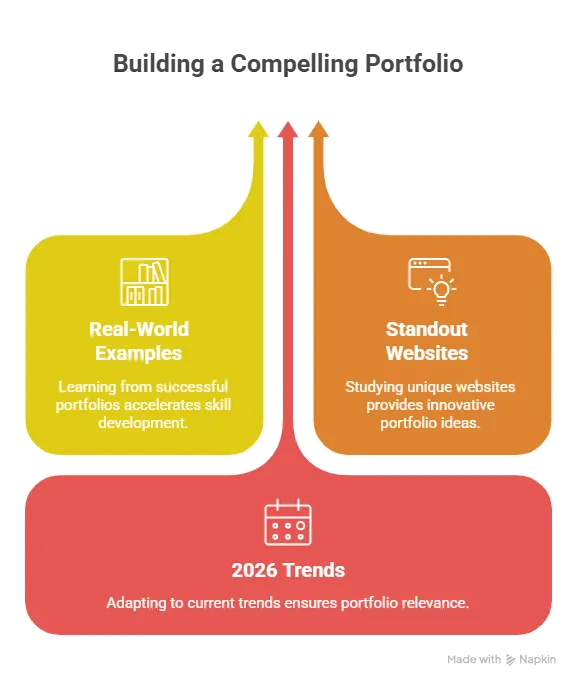
Looking at real software engineer portfolio examples is one of the fastest ways to understand what works. Here are some standout personal website examples for software engineers worth studying in 2026:
Julian Ozen
Clean, minimal layout with strong project descriptions and live demos. Excellent use of whitespace. Every project includes a full tech stack list and a link to the GitHub repository. A model of clarity.
Leland Jansen
One of the best full-stack developer portfolio examples available. Strong About section, logical skills grouping, and projects that show clear, measurable outcomes at every step.
Tom Weightman
Focuses on open source contributions and technical writing. Proves you do not need flashy visuals when your work speaks through content quality and clean code.
Arshin Jain
A great portfolio software engineer example for someone at the junior-to-mid transition. Bootcamp roots elevated with real deployments, live demos, and proper project documentation.
Jameson Nuss
A minimal one-page layout that loads instantly and communicates everything in a single scroll. A masterclass in keeping it simple without looking cheap or thin.
Key takeaway from all these examples: the best portfolios are clear, fast, and honest. They show real work, use plain language, and make it easy for someone to reach out.
Examples of Job-Winning Portfolio Structures
Portfolio #1: Clean and Modern
Hero section with name and title, a skills grid, three to four project cards with live links, a short About section, and a contact form. Simple. Effective. Gets callbacks consistently.
Portfolio #2: Open Source Focused
Leads with open source contributions and pull requests to well-known repositories. Includes a GitHub activity graph, a list of merged PRs, and short posts about the work behind each contribution.
Portfolio #3: Full-Stack Project Showcase
Highlights end-to-end products with both frontend and backend detail. Each project page covers the problem, solution, tech stack, architecture decisions, and deployment setup. Ideal for candidates targeting top software engineering companies that want to see real system-building ability.
Portfolio #4: Minimal One-Page Layout
Everything above the fold. Name, role, three project links, GitHub, and email. That is it. Works brilliantly for engineers who let their code do all the talking.
Portfolio #5: Creative Developer Site
Custom animations, interactive elements, and a strong personal brand. Works best for frontend engineers where design sensibility is part of the job requirement. Just keep performance in check.
How a Portfolio Helps in Job Search and Interviews
Your portfolio is not just a website. It is an active job search tool that works for you around the clock.
When applying for roles, paste your portfolio URL into every application. Mention it in your software engineer cover letter. Add it to the top of your resume. Pin it to your LinkedIn profile. Recruiters who visit it before an interview already feel like they know your work.
During interviews, your portfolio becomes a live reference. When asked to walk through a project, you can pull it up and demo it in real time. For preparation on discussing your work under pressure, this guide on software engineer interview questions is essential reading.
For cold outreach, a portfolio link in your message is far more effective than a resume attachment. It is lower friction, more engaging, and signals confidence in your work.
Portfolio Tips for Junior Software Engineers
If you are just starting out, whether through a computer science degree, a bootcamp, or self-study, a portfolio is not optional. It is your primary proof of ability. You can also explore how to become a computer programmer for a broader roadmap that puts portfolio building in full context.
Start with what you have. School projects, bootcamp assignments, and even guided tutorial projects are fine starting points. The key is to go one step beyond the tutorial. Add a feature, deploy it, improve the UI, write documentation. Make it genuinely yours.
Build at least one project completely from scratch with no starter template. It does not need to be complex. A weather app that pulls from a public API and displays clean, formatted data is more impressive than a bloated clone you barely understand.
Keep your GitHub active. Commit regularly, write meaningful commit messages, and keep repositories clean. Wondering how long it takes to get portfolio-ready? This realistic guide on how long it takes to become a software engineer gives you an honest timeline.
Do not wait until everything is perfect. Publish your portfolio, keep improving it, and treat it as a living document that grows with you.
Advanced Tips for Senior Software Engineers
If you are a senior or staff-level engineer, your portfolio needs to show a different kind of depth. Explore the full range of software engineer career options to understand how your portfolio can speak to leadership, architecture, and specialization.
Go beyond project showcases. Include design documents, technical specifications, and architecture diagrams. Show the decisions you made and the tradeoffs you navigated. This is the content that excites engineering managers and principal engineers.
Link to conference talks, podcast appearances, or YouTube explainers. Even a slide deck from an internal tech talk adds real credibility. It shows you communicate ideas clearly, not just write code.
Demonstrate mentorship and leadership through open source. Maintaining a library, reviewing pull requests from contributors, and building a contributor community shows you operate at a systems and people level simultaneously.
Senior engineers should also highlight cross-functional work. Leading a migration from monolith to microservices, collaborating with product on roadmap decisions, or owning a major technical initiative all belong on your portfolio. These stories complement your formal software engineer career path narrative powerfully.

Also read: Software Engineer Salary Australia 2026: $75K–$200K+ Complete AUD Guide
Frequently Asked Questions
-
Do I really need a portfolio if I already have a LinkedIn and resume?
Yes. A resume tells employers what you did. A portfolio shows them how you think and build. In 2026, hiring managers at competitive tech companies expect a portfolio, especially for mid-to-senior roles. It significantly increases your chance of getting a callback over candidates who only submit a resume.
-
How many projects should I include in my software engineer portfolio?
Three to five strong, completed projects are the sweet spot. Quality always beats quantity. One polished, deployed project with real metrics will impress more than ten half-finished apps. Aim to show range: a full-stack app, an API-based project, and an open source contribution together make a solid combination.
-
What is the best platform to host a software engineering portfolio website?
GitHub Pages is ideal for most developers. It is free and integrates with your existing Git workflow. Netlify and Vercel are excellent for React-based portfolios. If you want maximum professional credibility, pair any of these with a personal .com or .dev domain. The cost is minimal and the branding benefit is significant.
-
Should junior developers build a portfolio site?
Absolutely. Junior developers benefit more from a portfolio than anyone else. When you have limited work experience, your projects and code are your only proof of ability. A well-presented portfolio with two or three solid personal or bootcamp projects can be the difference between being ignored and getting an interview call.
-
How do I show impact if my projects are personal or academic?
Focus on what the project does, who it helps, and what technical challenges you solved. If you cannot show user numbers, highlight technical metrics like load time improvement, test coverage percentage, or API response speed. Describing the problem clearly and explaining your solution already demonstrates engineering maturity.
-
How do I link my portfolio to my LinkedIn and resume?
Add your portfolio URL to the website field on your LinkedIn profile and in the header section of your resume. Mention it in your profile summary. In cover letters, reference a specific project relevant to the role you are applying for. This creates a consistent professional trail that hiring managers can follow through your entire application.
-
How often should I update my software engineering portfolio?
Update it whenever you complete a meaningful new project, change your tech stack focus, or reach a new career milestone. At a minimum, review it every six months. An outdated portfolio signals stagnation. A regularly updated one shows growth, initiative, and that you are actively engaged in your work.
Conclusion
A software engineer portfolio is not a nice-to-have in 2026. It is the single most effective career tool you can build. Whether you are a junior developer landing your first role or a senior engineer targeting a staff position, your portfolio is what makes your skills real to the people hiring you.
Start simple. Get three strong projects live, write an honest About section, and make your contact details impossible to miss. Then iterate from there. The best portfolios are never truly finished; they grow with you as your career develops.
Treat your portfolio the same way you treat your code: keep it clean, keep it updated, and always be improving it. And when you are ready to plan the next step in your career, the complete software engineer career guide will show you exactly where a strong portfolio can take you.

Shahzada Muhammad Ali Qureshi (Leeo)
I’m Shahzada — a software engineer by education and an SEO professional by trade. I built WhatIsTheSalary.com to go beyond just showing salary numbers — every page is manually researched across sources like BLS, Glassdoor, LinkedIn Salary, and PayScale to give you the full picture in one place. If you found what you were looking for here, that’s exactly the point.