
TL;DR
Remote & Freelance Software Engineer Salaries are rising fast, but most developers still have no clear idea what they should actually be earning. Remote work exploded after 2020, freelance platforms multiplied, and companies now hire globally. Yet many engineers still accept outdated pay rates, leaving thousands of dollars on the table every year.
The real problem is the lack of transparent benchmarks. A developer in Europe might charge $40/hour while someone with the same skills in the US earns $120/hour remotely. Without reliable data, freelancers and remote engineers struggle to price their work, negotiate contracts, or compare opportunities.
That’s why many professionals turn to verified compensation platforms like whatisthesalary.com to find accurate salary and rate benchmarks before making career decisions.
This guide breaks down the real salary ranges for 2025–2026, from US and European remote jobs to freelance hourly rates and platform benchmarks. With clear numbers, comparisons, and negotiation insights, you’ll understand exactly where you stand and how to maximize your earning potential.
Remote Salaries
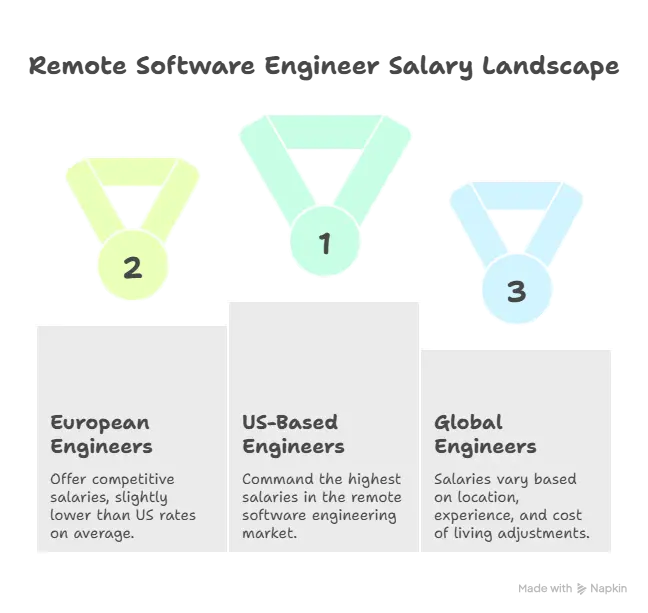
Remote software engineers’ pay is influenced by the company’s location, the employee’s experience, and sometimes cost‑of‑living adjustments. In general, US‑based engineers command the highest salaries, while European rates are competitive but slightly lower on average;
for a broader look at how compensation varies across markets and experience levels, many professionals explore insights under IT salaries.
US-Based Remote Software Engineer Pay
Remote engineers working for US companies in 2025–2026 can expect salaries that mirror local on-site positions. According to multiple market surveys:
| Experience Level | Average Base Salary (USD) | Total Compensation (USD, incl. bonuses & stock) |
|---|---|---|
| Entry-Level | $85,000 – $110,000 | $90,000 – $120,000 |
| Mid-Level | $120,000 – $150,000 | $130,000 – $170,000 |
| Senior / Staff | $160,000 – $210,000 | $180,000 – $250,000 |
Top-paying companies, particularly in the FAANG ecosystem, often include stock options, performance bonuses, and other perks, pushing total packages above these averages.
Europe-Based Remote Software Engineer Pay
European remote salaries are more varied, reflecting regional cost of living differences and company budgets — a trend consistent with broader software engineer salary by country data across the continent. Here’s an approximate breakdown:
| Country / Region | Average Base Salary (€) | Total Compensation (€) |
|---|---|---|
| Germany | €60,000 – €85,000 | €65,000 – €95,000 |
| UK | £55,000 – £80,000 | £60,000 – £90,000 |
| Netherlands | €65,000 – €90,000 | €70,000 – €100,000 |
| Eastern Europe | €30,000 – €55,000 | €35,000 – €65,000 |
While raw numbers may seem lower than US salaries, European engineers often benefit from generous vacation policies, healthcare coverage, and a better work-life balance, which offsets some of the difference.
Freelance / Contract Rates
Freelancers can earn more on an hourly basis but take on variability, client acquisition, and benefits management. Rates depend heavily on experience, platform, and technology stack.
Freelancers can earn more on an hourly basis but take on variability, client acquisition, and benefits management. Rates depend heavily on experience, platform, and technology stack.
For context on how experience drives earning potential at the highest level, software engineer salaries in Silicon Valley by experience level gives you a useful benchmark to measure your freelance rates against.
Hourly Rate for Freelance Developers
| Experience Level | Hourly Rate (USD) | Notes |
|---|---|---|
| Junior (0–2 yrs) | $20 – $50 | Typically smaller projects or startups |
| Intermediate (2–5 yrs) | $50 – $100 | Steady client base, specialized skills |
| Senior / Expert (5+ yrs) | $100 – $250+ | High-demand technologies, repeat clients, consultancy projects |
Specialized skills in AI, cloud architecture, or blockchain can push rates even higher, sometimes exceeding $300 per hour for short-term contracts.
Upwork & Other Platform Rate Benchmarks
Freelance platforms like Upwork, Toptal, and Fiverr set market expectations but also charge service fees — and for engineers considering the remote route more broadly, remote software engineer salaries cover how platform-based rates compare to full-time remote compensation. Here’s a snapshot from 2025–2026:
| Platform | Average Hourly Rate (USD) | Fee Structure |
|---|---|---|
| Upwork | $35 – $120 | 5–20% sliding scale |
| Toptal | $60 – $200 | No fee to client; freelancer pays fixed margin |
| Fiverr | $20 – $80 | 5–20% commission |
Successful freelancers often combine multiple platforms with direct client contracts to maximize earnings.
Pros & Cons: Salary vs Flexibility
Remote and freelance roles offer distinct advantages but come with trade-offs:
Pros
Cons
Tips for Freelancers

Also read: Software Engineer Salary in the United States (2026 Guide)
Frequently Asked Questions
-
What is the average salary for a remote software engineer in the US?
In 2025–2026, US-based remote software engineers earn on average $85,000–$210,000 depending on experience. Entry-level roles start around $85k, mid-level roles average $120k–$150k, and senior or staff engineers can reach $160k–$210k, with total compensation higher when bonuses or stock options are included.
-
How much can freelance software engineers earn per hour?
Freelance rates vary widely. Junior developers often earn $20–$50 per hour, mid-level developers $50–$100, and senior experts $100–$250+. Highly specialized skills in AI, cloud computing, or blockchain can exceed $300 per hour for short-term contracts.
-
Which freelance platforms pay the best rates for software engineers?
Top platforms in 2025–2026 include Upwork, Toptal, and Fiverr. Upwork averages $35–$120/hr, Toptal $60–$200/hr, and Fiverr $20–$80/hr. Many freelancers combine platform work with direct client contracts to maximize earnings.
-
Should I choose remote employment or freelancing for better income?
It depends on priorities. Remote employment offers stability, structured growth, and benefits, while freelancing provides higher hourly rates, flexibility, and diverse projects. Some engineers combine both approaches to optimize income and work-life balance.
Conclusion
The remote and freelance software engineering landscape in 2025–2026 offers unprecedented opportunities for skilled developers. US-based remote positions continue to lead in total compensation, while European roles provide competitive pay combined with better work-life balance. Freelancing offers flexibility and potentially higher hourly rates, especially for those with specialized skills or a strong client network.
Success in this space requires strategic planning: understanding market benchmarks, negotiating rates effectively, and choosing contracts that align with your financial goals and lifestyle. Whether you pursue a stable remote role, freelance projects, or a hybrid approach, the key is leveraging your expertise to maximize both income and flexibility.
By staying informed about market trends, diversifying income streams, and continuously honing your skills, software engineers can thrive financially and professionally in the evolving world of remote and freelance work.

Shahzada Muhammad Ali Qureshi (Leeo)
I’m Shahzada — a software engineer by education and an SEO professional by trade. I built WhatIsTheSalary.com to go beyond just showing salary numbers — every page is manually researched across sources like BLS, Glassdoor, LinkedIn Salary, and PayScale to give you the full picture in one place. If you found what you were looking for here, that’s exactly the point.