TL;DR
How AI Tools Are Changing Software Engineer Hiring in 2026 — imagine your resume being screened, matched, and interviewed by systems that know the exact skills, culture fit, and career trajectory companies need.
The problem: outdated job descriptions and biased screening still block top talent. The solution: AI-driven job parsing, skills graphs, and automated interview agents that surface diverse, high-fit candidates faster.
This shift means recruiters stop chasing keywords and start trusting data-backed profiles; hiring teams can run targeted, bias-reducing pipelines; candidates get clear upskilling paths and real-time feedback.
If you’re writing hiring guides, optimizing job posts, or advising candidates, this is your moment to redesign process, content, and learning—so everyone wins.
AI Recruitment Tools Have Moved From Pilot Project to Default Infrastructure
Adoption numbers back this up. Industry research from 2026 puts AI recruiting software usage at roughly 87% of companies, with more than 65% of recruiters using it daily. Nearly three in four companies plan to expand AI use in hiring over the next year.
That does not mean the tools are flawless. A 2026 CHRO survey found that most HR leaders say their recruiting technology only partially meets expectations, and just over a quarter call it exceptional. Still, around 95% of US hiring managers expect their company to invest even more in AI to streamline hiring in the coming year, so this is not slowing down.
AI Agents Are Now Doing the First Pass on Technical Screening
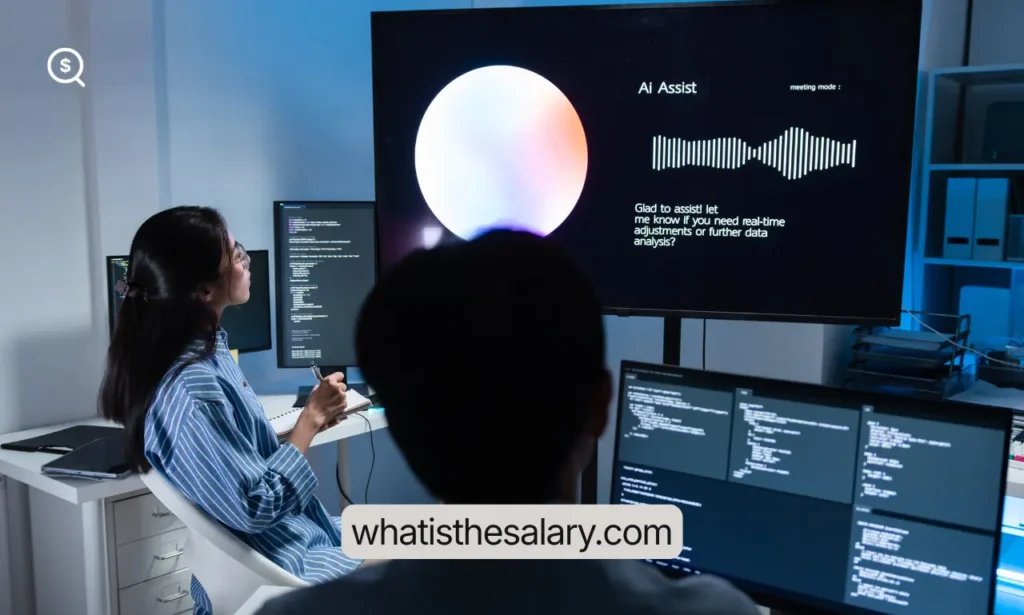
AI agents increasingly handle the earliest stages of technical screening. Studies from Talent Board and Phenom found AI-powered screening tools can cut time spent reviewing resumes by up to 75%, and LinkedIn data shows companies using AI-assisted recruiter messaging are about 9% more likely to make a quality hire.
Even at companies with rigorous processes, this layers on top of human rounds rather than replacing them. Our breakdown of the Google software engineer hiring process shows exactly where AI-assisted screening fits alongside the recruiter screen, coding assessment, and virtual onsite.
Skills-Based Hiring Is Replacing the Resume-First Model
Skills-based hiring is the biggest philosophical shift in engineering recruitment right now. Google, Apple, and IBM have all dropped four-year degree requirements for many engineering roles, asking instead for proof of skill through portfolios, contributions, and assessment performance.
This benefits people who came up through non-traditional paths. If you took a coding bootcamp route into software engineering, this is arguably the best hiring environment in years to prove yourself on merit. Knowing the most in-demand programming languages to showcase still matters just as much.
Aptitude Assessments and Code Validation Take Center Stage
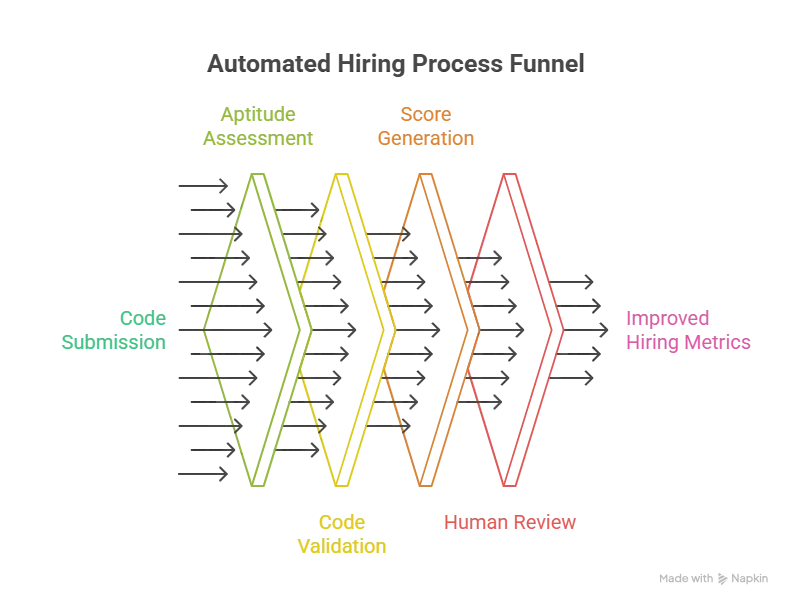
Aptitude assessments and code validation tools are doing more of the actual gatekeeping than they used to. Automated platforms now run submitted code against real test suites and produce a score before a human ever looks at the submission.
Bullhorn’s GRID 2026 report found that more than half of firms using AI-driven screening saw hiring metrics improve by 25% or more.
Our guide to remote entry-level software engineer hiring lays out where this coding assessment stage typically sits, and our comparison of a software engineer versus a software developer covers which competencies get tested.
AI-Assisted Interviews: What Candidates Should Expect
AI-assisted interviews are becoming routine rather than experimental. Phenom’s research found that 80% of organizations using AI to schedule interviews saved around 36% of the time versus manual coordination, and some employers now score asynchronous video interviews with AI for early rounds, saving live conversations for later stages.
This has not been without controversy. HireVue dropped its facial recognition scoring feature in 2021 over concerns it penalized candidates with accents, and Workday currently faces a lawsuit alleging its screening tools discriminate by race, age, and disability. Expect these formats early and often in high-volume hubs like Seattle.
Generative AI in Hiring: From Job Descriptions to Candidate Outreach
Generative AI in hiring now touches the parts of recruiting that used to be entirely manual, drafting job descriptions and personalizing outreach at scale.
One enterprise case study cut average application time from 30 minutes to 3, and conversion to hire more than doubled as a result.
For candidates, this means the outreach and posting you are reading may both be AI-generated and tailored to your inferred background. Pair that awareness with a clear sense of direction.
Our guide to software engineer career options maps out 19 paths worth knowing before an AI-drafted message lands in your inbox.
Engineering Team Recruitment: What Is Actually Different in 2026
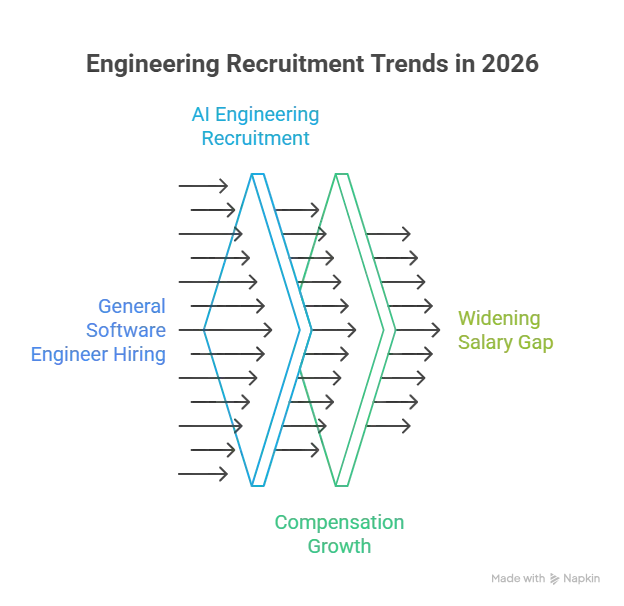
Engineering team recruitment has bifurcated. General software engineer hiring has been comparatively flat at some large employers, while AI engineering recruitment is running hot, with companies like Apple, Google, and TikTok posting 50% to 100% more AI engineering openings than a year earlier.
Compensation follows suit. Our breakdown of software engineer salary by experience level and roundup of top software engineering companies both show that widening gap.
AI Recruiting Tools by Category
Here is a plain breakdown of what these tools actually do at each stage of the pipeline, and what results employers are reporting in 2026.
| Tool Category | What It Does | Reported 2026 Impact | Typical Use Case |
| Resume and application screening | Uses NLP to scan and rank resumes against job requirements | Up to 75% less time spent on manual resume review (Talent Board / Phenom) | Filtering thousands of applicants for one opening |
| Aptitude and skills assessments | Tests coding ability and problem solving instead of relying on a resume | Over half of firms using AI screening saw key metrics improve by 25%+ (Bullhorn GRID 2026) | Auto-scored take-home coding tests |
| Code validation platforms | Runs submitted code against test cases and quality benchmarks | Cuts technical review time while keeping human sign-off | Automated grading ahead of a live interview |
| AI-assisted interviews | AI agents support or conduct early-stage interview rounds | Interview scheduling time cut by around 36% where AI coordinates it (Phenom) | Async video screens paired with human follow-up |
| Candidate sourcing and messaging | Generative AI drafts personalized outreach at scale | Outreach drafted up to 80% faster than manual writing | Recruiter campaigns for hard-to-fill engineering roles |
| Predictive hiring analytics | Predicts candidate-role fit from historical placement data | Employers using AI screening plus human interviews report roughly 25% better first-year retention | Ranking finalists before an offer is extended |
Where AI Recruitment Tools Still Fall Short
Trust remains the biggest gap between adoption and acceptance. Only about 26% of applicants trust AI to evaluate them fairly, and roughly two-thirds of US adults say they would avoid a job that uses AI in the hiring decision.
Regulation is catching up: New York City’s Local Law 144 requires a bias audit and candidate notice before using automated hiring tools, and EU AI Act obligations for general-purpose AI took effect in August 2026.
None of this means the tools are going away, only that knowing your rights matters. If you are early in your software engineer career path, understanding how these systems score you is now as practical as knowing your target salary range.
What This Means If You Are Job Hunting Right Now
Treat every application as if a machine reads it first, because one usually does. Keep a portfolio that proves your coding ability directly, since skills-based hiring rewards evidence over adjectives.
Practice assessments under real time pressure, since code validation tools grade on correctness, not effort. And ask directly whether an interview stage involves an AI agent, since disclosed, well-governed tools tend to get measurably better outcomes.

Frequently Asked Questions
-
Do AI recruitment tools replace human recruiters in software engineering hiring?
No. Most employers use AI to handle high-volume, repetitive tasks like resume screening and scheduling, while keeping humans responsible for final decisions. Companies that combine AI screening with human-led final interviews report both faster time-to-hire and better first-year retention.
-
How do AI agents evaluate code during technical screening?
Code validation platforms run submitted code against predefined test cases, check for correct output, and assess efficiency and code quality against a rubric. The score then feeds into the recruiter’s shortlist rather than triggering an automatic rejection in most well-run pipelines.
-
Is skills-based hiring making computer science degrees less important?
Degrees still matter at some employers, but many large tech companies now accept demonstrated skill in place of a formal degree for many engineering roles. Portfolios, open-source contributions, and assessment performance increasingly carry more weight than the credential alone.
-
Can I ask if my interview involves an AI agent?
Yes, and it is a reasonable question to ask. In some jurisdictions, including New York City, employers are legally required to disclose the use of automated employment decision tools and to have completed a bias audit before using them.
-
What is code validation software and how does it grade candidates?
Code validation software automatically executes a candidate’s submitted code against test cases and benchmarks, checking for correctness, edge-case handling, and performance. It is typically one input into a broader technical screening decision rather than the sole factor.
-
Are AI hiring tools legal to use in every US state?
Rules vary by location. New York City requires bias audits and candidate notice under Local Law 144, and other states and cities have introduced or are considering similar requirements. Employers operating nationally generally have to meet the strictest applicable local standard.
-
How is generative AI used in writing job postings?
Generative AI drafts job descriptions and outreach messages based on role requirements and past successful postings, then a recruiter typically reviews and edits before publishing. This is one of the fastest-adopted uses of AI in hiring because the risk of a bad output is low and easy to catch.
How This Article Was Put Together
The statistics referenced here come from 2026 industry research and reports on AI recruiting adoption, technical screening, and hiring compliance, alongside labor market data on engineering and AI engineering job openings.
No figures were invented or estimated without a source behind them. This article was written to help software engineers and hiring teams understand how recruiting technology is actually being used in 2026, not to promote any specific platform or vendor.

Shahzada Muhammad Ali Qureshi (Leeo)
I’m Shahzada — a software engineer by education and an SEO professional by trade. I built WhatIsTheSalary.com to go beyond just showing salary numbers — every page is manually researched across sources like BLS, Glassdoor, LinkedIn Salary, and PayScale to give you the full picture in one place. If you found what you were looking for here, that’s exactly the point.