TLDR
Is software engineering still a good career in Australia — or is it quietly becoming one of those “good while it lasted” fields? If you’ve been scrolling through Reddit threads, watching headlines about AI layoffs at Atlassian and WiseTech, or second-guessing your CS degree, you’re not alone. “Salary“
Here’s the uncomfortable truth: the old version of this career is changing fast. Software engineers are no longer listed as critically short in any Australian state or territory — a first since 2021. And Australia now ranks second globally for tech job losses, with AI cited as the primary driver behind layoffs. That’s not nothing.
But here’s what most panic-driven articles miss: this isn’t a collapse. It’s a reset. Seven of the ten fastest-growing ICT roles in Australia are AI-related, and salaries for software engineers are sitting between AUD $120,000 and $150,000 per year. The engineers who understand what’s actually shifting — and adapt accordingly — are finding more opportunity, not less. This guide breaks it all down clearly.
Is Software Engineering Still Worth It in Australia?
I get asked this a lot, usually by someone who just read a headline about tech layoffs or AI replacing coders. And honestly, I understand the concern. The market has shifted. But when you actually look at the data coming out of Australia in 2026, the picture is more nuanced than the panic suggests.
Australia is not Silicon Valley. The market here operates differently, pays differently, and is affected by AI differently. If you are trying to figure out whether to start, continue, or double down on a software engineering career in Australia, here is what the real numbers and real market conditions look like right now.
Job Demand: Is Software Engineering Still on the Shortage List?
Yes, and by a wide margin. Software engineers remain on Australia’s Medium and Long-Term Strategic Skills List (MLTSSL), meaning the government officially recognises a shortage. According to data from Jobs and Skills Australia (February 2026), the tech sector continues to show strong employment growth despite broader economic caution.
The current shortage sits at nearly 60,000 skilled ICT professionals across the country. That gap is not closing quickly. Companies across finance, healthcare, e-commerce, and government are actively recruiting engineers to support digital transformation, cloud migration, and AI deployment.
According to Emanate Technology’s 2026 IT market report, the highest demand is coming from cybersecurity, cloud infrastructure, data and AI, and platform engineering roles. General software development roles are more competitive at mid-level, but senior and specialised engineers are still being actively pursued.
Australia’s tech sector has grown by 80 percent over the past five years, reaching a value of AUD 167 billion. That kind of growth does not happen without a sustained need for the engineers building the systems underneath it.
Software Engineer Salary in Australia in 2026: What Are People Actually Earning?
Different platforms report different numbers, and there is a reason for that. Glassdoor and Seek capture a wider cross-section of companies, while Levels.fyi skews toward top-tier tech companies where total compensation includes base, stock, and bonus.
According to Levels.fyi, the median total compensation for a software engineer in Australia sits at AUD 148,906, with the 75th percentile reaching AUD 185,960. The highest-paying company on their data is Atlassian, averaging AUD 310,028 in total comp.

PayScale data puts the average base salary closer to AUD 95,000 to 115,000 depending on experience and skills. The gap between these numbers is real: Levels.fyi captures top-of-market roles at FAANG-adjacent companies, while PayScale reflects the broader market including smaller firms and government contracts. Both are true; they just describe different slices of the same market.
Software Engineer Salary in Australia by Experience Level (2026)
| Experience Level | Years of Experience | Average Annual Salary (AUD) | Key Skills in Demand |
| Junior / Entry-Level | 0 to 2 years | AUD 70,000 to 90,000 | Python, Java, Git, SQL |
| Mid-Level | 3 to 6 years | AUD 100,000 to 130,000 | AWS, React, Node.js, CI/CD |
| Senior Engineer | 7 to 10 years | AUD 130,000 to 160,000 | System Design, Cloud, DevOps |
| Lead / Principal | 10+ years | AUD 160,000 to 200,000+ | Architecture, AI/ML, Leadership |
Salary by Experience Level
Junior Software Engineer (0 to 2 Years)
Entry-level roles in Australia pay between AUD 70,000 and AUD 90,000 per year. If you are just starting out, you can check the junior software engineer salary breakdown for Australia for a detailed picture of what to expect city by city.
Landing that first role in 2026 is harder than it was three years ago. AI tools are handling a lot of what junior engineers used to do, like basic testing, boilerplate code, and simple debugging. But the roles still exist. They are just more competitive, and employers now want junior hires who show comfort with AI-assisted development from day one.
Mid-Level Software Engineer (3 to 6 Years)
Mid-level engineers typically earn between AUD 100,000 and AUD 130,000. This is where the market gets interesting. If you have solid cloud skills, CI/CD experience, or front-end expertise in React or Vue, you are in a much stronger position. You can explore the mid-level software engineer salary in Australia to see how different specialisations affect your earning potential at this stage.
The 3 to 6 year mark is also when most engineers start thinking seriously about whether to stay at their current employer or move. The data consistently shows that changing companies at this level can mean a 15 to 25 percent salary increase compared to internal promotions.
Senior Software Engineer (7+ Years)
Senior engineers in Australia earn AUD 130,000 to AUD 160,000 on average, with PayScale putting experienced senior developers at up to AUD 159,000 in base pay. The senior software engineer salary in Australia varies depending on whether you are in a product company, a consultancy, or government, with product companies typically paying the most.
At this level, total compensation matters more than base. Senior engineers at companies like Atlassian, Canva, or the big four banks often receive performance bonuses and, in some cases, equity or stock options that push total comp well above the base salary figure.
Lead / Principal Engineer (10+ Years)
Lead and principal engineers can earn AUD 160,000 to well over AUD 200,000 in total compensation. PayScale data shows lead engineers averaging AUD 146,653 in base salary, with total pay reaching AUD 206,000 when bonuses and profit sharing are included. At Atlassian specifically, Levels.fyi data shows total comp averaging AUD 310,028, which puts Australian top-of-market salaries in a different category.
Software Engineer Salary by City: Where Should You Be?
Sydney remains the highest-paying city for software engineers in Australia, with averages sitting between AUD 115,000 and AUD 132,800. The software engineer salary in Sydney reflects its position as Australia’s largest tech market, home to major banks, global tech companies, and a booming FinTech scene.
Melbourne is the second-highest, averaging around AUD 113,000, with strong demand in HealthTech, gaming, and SaaS. Brisbane comes in at AUD 107,000 to AUD 110,000 on average, with a lower cost of living making the net financial position more attractive than the raw salary might suggest.
Perth and Adelaide are smaller markets but growing, particularly in mining tech, cybersecurity, and defence. State nomination pathways also make Adelaide a strategic option for engineers seeking PR.
For a full national breakdown, the software engineer salary in Australia overview covers salary ranges across all major cities and compares them against cost of living metrics.
What AI is Actually Doing to Software Engineering Careers in Australia
This is the section most people actually want to read. And the honest answer is: AI is changing software engineering, not ending it.
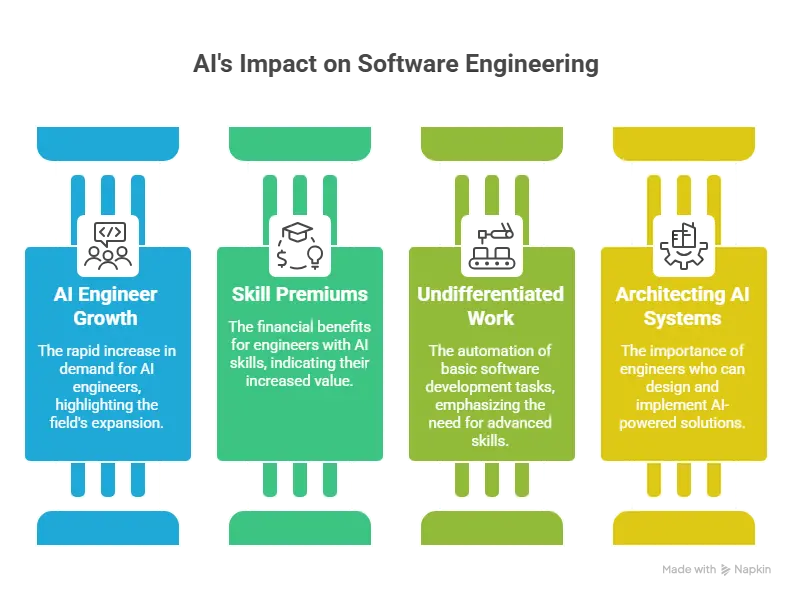
LinkedIn’s Jobs on the Rise 2026 report found that AI Engineer is now the fastest-growing tech role in Australia. Demand for AI and machine learning skills has surged by 245 percent since 2023, according to Cornerstone’s 2026 Skills Economy Report.
Engineers who can integrate large language models, build RAG systems, or deploy AI into production environments are commanding 20 to 30 percent salary premiums over comparable non-AI roles.
What is under pressure is general, undifferentiated software development work. Basic testing, CRUD app development, and boilerplate code are being handled faster with AI tools. But the engineers who know how to use those tools, review AI-generated code, and architect systems around AI capabilities are more valuable now than they were two years ago.
The message from Australian hiring data is clear. AI literacy is the most in-demand skill right now. Eight in ten global company leaders say they are more likely to hire someone who is AI-proficient, even over someone with more years of experience.
Skills That Actually Move Your Salary in 2026
Not all skills are equal when it comes to what employers will pay. Based on current market data from Australian hiring platforms, here is where the pay premiums are sitting:
If you are deciding which direction to take your skills, the best programming languages to learn in 2026 is worth reading alongside salary data to see which languages actually translate to income in the Australian market.
Software Engineer Career Path: What Does Growth Look Like?
A software engineering career in Australia typically follows a clear progression, though the pace depends heavily on where you work and how you position yourself. If you want a full breakdown of the paths available, the software engineer career options guide covers everything from individual contributor tracks to engineering management and consulting.
Year 0 to 2: You are learning the codebase, shipping features, and building foundational habits. Salary sits in the junior range.
Year 3 to 6: You start owning systems, mentoring others, and picking up a specialisation. This is the fastest period of salary growth if you move companies strategically.
Year 7 to 10: At the senior level, your value comes from technical judgment, not just output. Companies pay a serious premium for engineers who can reduce complexity and make good architectural decisions.
Year 10 and beyond: You either go deep as a principal or staff engineer, move into engineering management, or step into consulting or product leadership. Each path has a different ceiling.
The biggest career growth accelerator? Changing companies at the right time. Engineers who stay at one employer for more than four years consistently fall behind market rate. The data on this is pretty clear.
How to Become a Software Engineer in Australia in 2026
The path into software engineering is more varied now than it has ever been. A computer science degree still helps, but it is not the only route. If you are exploring how to get into the field, the guide on how to become a computer programmer walks through the practical steps including education pathways, bootcamps, and what employers actually care about when hiring in 2026.
Employers are increasingly placing more weight on demonstrated skills than credentials. According to Australian hiring data, 67 percent of employers highly value on-the-job training and 61 percent value certifications, particularly cloud certifications from AWS, Google, or Microsoft.
For overseas professionals, software engineering remains on the MLTSSL, and over 1,800 developer roles currently advertised on Australian job boards include visa sponsorship.
Standing Out When You Apply: Cover Letters and Programming Fundamentals
Getting a foot in the door still requires a strong application. If you are preparing for job applications, having a well-written software engineer cover letter tailored to the Australian market makes a genuine difference, particularly for competitive senior and mid-level roles where hiring managers are reviewing dozens of applications.
On the technical side, knowing the best programming languages for software engineering in the current Australian market helps you focus your learning. Python, JavaScript, Java, and Go are consistently the most requested, with Rust gaining ground in systems and infrastructure roles.
Common Misconceptions About Software Engineering Careers in Australia
Myth 1: AI is replacing software engineers.
The reality is more nuanced. AI is replacing some tasks, not the engineers who know how to use it. The engineers being affected are those who are not adapting. The ones upskilling in AI tools and AI-adjacent development are getting hired faster and paid more.
Myth 2: Only Sydney and Melbourne are worth considering.
Brisbane is growing fast. Adelaide has active state nomination programs and serious defence tech investment. For engineers willing to go where the demand is, smaller markets can offer faster career progression with lower competition.
Myth 3: You need a degree to earn a strong salary.
Australia’s tech market has largely moved past this. Certifications, bootcamp graduates, and self-taught developers with strong portfolios are landing competitive roles. What matters is what you can actually build and ship.
Myth 4: The market is oversaturated.
It feels that way at the entry level, and entry-level hiring is genuinely tighter in 2026. But Australia has a real ICT shortage at every other level. The demand problem is not too many engineers; it is too few experienced and specialised ones.

Also read: Highest Paying Software Engineering Specialisations in Australia (2026)
Frequently Asked Questions
-
Is software engineering a good career in Australia in 2026?
Yes, with the right skills. The market is selective, particularly at entry level, but demand for experienced and specialised software engineers remains high across cloud, AI, cybersecurity, and platform engineering. The ICT shortage is real and sustained.
-
What is the average software engineer salary in Australia in 2026?
The average base salary sits between AUD 95,000 and AUD 125,000 depending on experience. Total compensation including bonuses and equity at top-tier companies can reach AUD 148,906 at the median, with the top 25 percent earning AUD 185,960 or more, according to Levels.fyi data.
-
Is it hard to get a software engineering job in Australia right now?
Entry-level is more competitive than it was two to three years ago due to a combination of AI handling basic tasks and more graduates entering the market. Mid-level and senior roles are still in strong demand, particularly for engineers with cloud, AI, or cybersecurity experience.
-
Which city in Australia pays software engineers the most?
Sydney consistently offers the highest software engineering salaries in Australia, averaging AUD 115,000 to AUD 132,800. Melbourne is close behind at around AUD 113,000. Brisbane offers lower salaries but also lower cost of living, which can work out to a similar or better financial position in practice.
-
Does AI hurt software engineering careers in Australia?
It changes them. AI is reducing demand for purely routine development work but increasing demand for engineers who understand AI systems, can deploy AI into production, and can review and maintain AI-generated code. Engineers who add AI fluency to their existing skills are seeing stronger hiring outcomes and salary premiums of 20 to 30 percent in 2026.
-
Is software engineering on the skills shortage list in Australia?
Yes. Software engineers remain on Australia’s Medium and Long-Term Strategic Skills List (MLTSSL) as of 2026. The current shortage across the ICT sector is estimated at nearly 60,000 professionals, supporting both visa sponsorship pathways and strong domestic hiring demand.
How This Article Was Created
The salary figures in this article are drawn from Levels.fyi, PayScale, Glassdoor, and Leverage Edu’s 2026 Australia salary guide. No figures were fabricated. All data references credible compensation platforms with publicly reported figures as of early to mid 2026.
Job market insights reference LinkedIn’s Jobs on the Rise 2026 report, Cornerstone’s 2026 Skills Economy Report, Jobs and Skills Australia (February 2026 Labour Force Survey data), and Emanate Technology’s 2026 IT Job Market analysis.
This article was written to inform job seekers, career changers, and professionals benchmarking their compensation. It does not represent recruitment services or advertising for any employer.
Share Your Experience
If you are working as a software engineer in Australia right now, I would genuinely like to hear what the market looks like from your side. Did your last role change come with a significant pay jump? Are you seeing more AI-related requirements in job descriptions? Drop your thoughts in the comments. Real-world data points from actual engineers are more useful than any salary survey.

Shahzada Muhammad Ali Qureshi (Leeo)
I’m Shahzada — a software engineer by education and an SEO professional by trade. I built WhatIsTheSalary.com to go beyond just showing salary numbers — every page is manually researched across sources like BLS, Glassdoor, LinkedIn Salary, and PayScale to give you the full picture in one place. If you found what you were looking for here, that’s exactly the point.