TL;DR
625,633 tech jobs are open right now, yet 75% of resumes never reach a human. So why are you still waiting for a reply?
How to Get Hired Fast in the US Tech Job Market is not about applying everywhere. With 155,000 tech layoffs this year, generalists get skipped while specialists land offers in weeks. Every slow week costs you real money.
This guide gives you the exact roles, certifications, and resume moves that work in 2026. Compare real pay first with US tech salary data from WhatIsTheSalary.com, then build your plan.
Understand the 2026 US Tech Hiring Reality
Before you send a single application, you need to understand what is actually happening in the market right now. In 2026, the tech hiring landscape is not a straight upward line — it is a split market, and knowing which side you are on makes all the difference.
Net tech employment is projected to grow by 1.9% in 2026, adding roughly 185,000+ new tech jobs across the country. CompTIA reported 625,633 active tech job postings in September 2026 — the highest in more than three years. At the same time, tech companies have cut over 155,000 jobs in the US so far this year, mostly in mid-level generalist roles at large enterprises.
The message is clear: specialized skills get hired, generalists get stuck. If you are chasing job listings in senior AI, cloud, and cybersecurity roles, you are swimming in the right direction. If you are applying for generic software engineering roles without a specialization, you are competing with hundreds of applicants for very few seats.
The tech unemployment rate stood at 2.8% in July 2026 — well below the national rate of 4.2% — which means experienced, skilled professionals are moving fast. You need a strategy that makes you visible and credible in the right places.

Target the Right Roles — Where Hiring Is Actually Happening
Not all tech roles are created equal in 2026. Some areas have a talent shortage so severe that companies are willing to hire candidates without a traditional degree if they have the right skills and certifications.
The highest-demand areas right now are:
If you are still figuring out which direction to move in, reading through a structured cybersecurity career path or comparing roles by salary can help you make that call faster.
2026 US Tech Roles at a Glance: Salaries, Skills & Hiring Speed
| Role | Median Salary (2026) | Skills Required | Avg. Time to Hire |
| AI/ML Engineer | $145,000 – $195,000 | Python, TensorFlow, MLOps, LLMs | 42 days |
| Cloud Architect | $135,000 – $185,000 | AWS, Azure, GCP, Terraform | 48 days |
| Cybersecurity Engineer | $120,000 – $165,000 | CompTIA Security+, CISSP, Zero Trust | 38 days |
| Data Engineer | $115,000 – $155,000 | SQL, Spark, dbt, Cloud Pipelines | 45 days |
| DevOps / Platform Eng. | $120,000 – $160,000 | Kubernetes, CI/CD, Docker, Python | 44 days |
| Software Engineer (Senior) | $130,000 – $175,000 | Python, AWS APIs, System Design | 54 days |
| CISO / Security Lead | $160,000 – $250,000+ | Risk Mgmt, Compliance, Cloud Sec | 60+ days |
| Cloud Support Specialist | $65,000 – $95,000 | Azure/AWS Basics, Ticketing, Docs | 28 days |
Get the Certifications That Open Doors
In 2026, certifications have become more than a nice-to-have — for many roles, they are the baseline expectation at the screening stage. Research shows that 87% of tech leaders are willing to pay more for validated skills, and cloud and cybersecurity certifications consistently command a 20–25% salary premium. Workers with AI skills carry a 62% wage premium over non-certified peers, according to PwC.
The certifications with the strongest ROI in 2026 are:
Cloud Certifications
Cybersecurity Certifications
AI and Data Certifications
Still deciding between a bootcamp and a degree for cloud roles? The comparison of cloud bootcamp vs degree outcomes breaks it down with real salary data.
Build a Resume That Actually Gets Past ATS
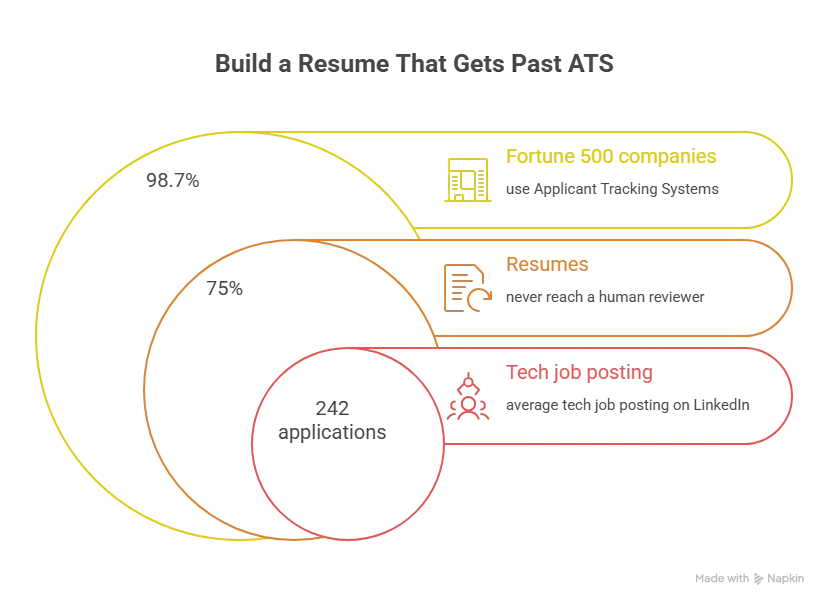
Here is a hard truth: 98.7% of Fortune 500 companies use Applicant Tracking Systems (ATS) such as Workday, Taleo, or Greenhouse, and 75% of resumes never reach a human reviewer. Your resume must speak to an algorithm before it speaks to a person.
In 2026, the average tech job posting on LinkedIn attracts 242 applications. Yours needs to get through the filter and then stand out from the pile. Here is how:
One more thing: respond to recruiters fast. In a market where time-to-hire for senior roles averages 54 days, companies want candidates who move. Waiting 48 hours to reply to a recruiter message is a real reason people get passed over.
Network Like a Professional, Not Like a Job Seeker
Referred candidates are 5–10x more likely to get hired, and 46% of successful tech hires in 2026 came from personal networking. This is not optional — it is the fastest path to an offer.
But networking in tech does not mean cold-messaging 200 strangers on LinkedIn. It means being visible in the right places:
Show Your Work — Build a Portfolio That Speaks for Itself
In a skills-based hiring environment — and skills-based hiring has become the dominant model in 2026 — what you can demonstrate matters more than what you have done. Certifications get you to the interview. Your portfolio gets you the offer.
What should a strong tech portfolio include?
If you are comparing salaries across cities while deciding where to focus — a data scientist salary breakdown by city can help you understand where the money is highest relative to cost of living.

Prepare for the Interview Like It Is a Skill Test
In 2026, more companies are adding a second AI screening layer after the ATS. That means a technical screening before you ever speak to a human. You need to be ready for that before you even get to a live interview.
Practical preparation steps:
The Soft Skills That Seal the Deal in 2026
Technical skills get you to the final round. Soft skills close the offer. Robert Half’s 2026 research found that tech leaders ranked these soft skills as most critical alongside AI tools:
What this looks like in practice: you explain your technical decisions clearly to non-technical stakeholders. You proactively upskill when a technology shifts. You bring ideas to the table, not just completed tasks. These qualities separate candidates who get offers from those who just pass technical screens.
Final Thoughts
The US tech job market in 2026 rewards preparation, specialization, and speed. Companies are not waiting for the perfect candidate — they are moving fast on the closest qualified one. If you build in-demand skills, validate them with certifications, make your resume ATS-ready, and network with intent, you will cut your time to offer significantly.
The candidates who struggle are the ones still applying broadly with a generic resume. The ones getting hired are the ones who picked a lane — cloud, security, AI, data — got credentialed, and showed up with real projects behind them.

Shahzada Muhammad Ali Qureshi (Leeo)
I’m Shahzada — a software engineer by education and an SEO professional by trade. I built WhatIsTheSalary.com to go beyond just showing salary numbers — every page is manually researched across sources like BLS, Glassdoor, LinkedIn Salary, and PayScale to give you the full picture in one place. If you found what you were looking for here, that’s exactly the point.