TLDR
One path costs about $14,000 and takes months. The other can cost $48,000 to $180,000 in tuition alone and takes four years. So, cloud bootcamp vs degree: which pays off faster in the US? Pick wrong and you lose either years of pay or a door that stays shut.
Most advice online comes from people selling one of those options. I pulled 2026 numbers from the Bureau of Labor Statistics, the College Board, and the New York Fed, then ran the payback math myself. One result stood out: time to your first paycheck matters more than tuition.
Below, you will see costs, pay by experience level, and the point where a degree catches up. For more pay breakdowns by role, check real salary data at WhatIsTheSalary.com, then pick your path with confidence.
Cloud Engineer Salary in the US: What Each Source Says
Start with pay, because every other number depends on it. KORE1’s 2026 salary guide reports that Glassdoor (February 2026) averages about $150,737 for cloud engineers, while Indeed sits near $135,619. DataCamp, citing PayScale, puts entry level cloud engineers at roughly $101,337. The Bureau of Labor Statistics reports a median of $99,130 for network and computer systems administrators in May 2025. Across all computer and IT occupations, the median was $105,990 in May 2024, against $49,500 for all jobs.
Why the spread? Glassdoor and Indeed rely on user submissions that lean toward big cities and big employers. BLS counts every employer size and region. I treat BLS as the floor and Glassdoor as the optimistic ceiling. Your first job will probably land between them.
| Source | Reported figure | What it covers |
| Glassdoor (Feb 2026, via KORE1) | $150,737 average; $237,729 at the 90th percentile | Self reported cloud engineer pay |
| Indeed (2026, via KORE1) | $135,619 average | Salary submissions |
| PayScale (via DataCamp) | $101,337 | Entry level cloud engineer |
| BLS (May 2025) | $99,130 median | Network and computer systems administrators |
| BLS (May 2024) | $105,990 median | All computer and IT occupations |
Cloud Bootcamp vs Degree Salary by Experience Level
Entry level (0 to 2 years)
KORE1 puts entry level cloud pay at $110,000 to $130,000. I would call that a best case. Those figures describe people who already hold a cloud engineer title, and for career changers that is often the second or third job, not the first. For context, New York Fed data, as reported by NewsNation, shows recent computer science graduates with only a bachelor’s earning about $87,000 early in their careers.
Bootcamp graduates report an average first tech salary of $70,698 in Course Report data, relayed by Metana. That figure covers every bootcamp track and comes from graduates themselves, so read it as a loose guide.
Mid level (3 to 6 years)
The same Course Report data shows $80,943 at a second tech job and $99,229 at a third. A 2026 Nucamp analysis finds mid career computer science degree holders earn about 20 to 25% more than bootcamp graduates. That gap is the best argument for a degree, though it measures coding roles, not cloud specifically. For a closer look at progression, see our guide to cloud engineer salary by experience level.
Senior and architect (7 or more years)
Glassdoor’s 90th percentile for cloud engineers lands near $237,729, according to KORE1. At this level, how you got in matters less than the scale of systems you ran and the design decisions you led.
Total Compensation vs Base Salary
Most offers get misread because people compare base pay only. Total comp adds a yearly bonus, RSUs (company stock that vests over time), and often a signing bonus. A vesting schedule usually spreads stock over four years, and many companies add a one year cliff, which means nothing vests if you leave early.
Picture two hypothetical offers. Sam takes a $95,000 base and a $5,000 bonus at a mid sized firm. Priya takes a $90,000 base, a $10,000 signing bonus, and an $80,000 RSU grant vesting over four years. In year one, Sam collects $100,000 and Priya collects $120,000, as long as the stock holds its price. Priya’s offer looks smaller until you add it up.
This matters here because large cloud vendors and enterprise employers often put more of the package in stock and bonuses. Their campus recruiting and internships feed those jobs, which is a real edge for degree holders. If you pick a bootcamp, ask for named hiring partners. More detail in our guide to RSUs, vesting, and signing bonuses.

Where You Live and Study Changes the Math
DataCamp notes that cloud salaries run higher along the East and West Coasts, though cost of living eats part of that gain. Remote roles can shift this, so check whether an employer pays by location.
Tuition varies just as much in the cloud bootcamp vs degree comparison. The College Board reports average 2025 to 2026 published tuition and fees of $11,950 at public four year colleges for in state students, $31,880 for out of state students, and $45,000 at private nonprofit schools. In state rates range from $6,360 in Florida to $18,090 in Vermont. Studying in your own state changes the comparison a lot.
What Moves Your Cloud Salary More Than Your Credential
Role matters first. KORE1 reports DevOps engineers at $130,000 to $143,000 in base pay in early 2026, with entry roles around $81,000 to $95,000. Infrastructure as code, Kubernetes, and cloud security skills tend to push offers higher.
Certifications such as the AWS Solutions Architect Associate or Google Associate Cloud Engineer help too, though one cloud training author puts it plainly: certs get you interviews, not the job. Our AWS certification roadmap shows where to start. After year three, your track record usually matters more than where you studied.
Cloud Bootcamp vs Degree: The Opportunity Cost Math Most Articles Skip
| Factor | Cloud bootcamp | Four year degree |
| Typical cost | $5,000 to $20,000 (Nucamp average: $13,584) | $11,950 a year at public in state schools, $45,000 at private (College Board). That is about $47,800 to $180,000 in tuition alone over four years (my math). |
| Time before first paycheck | About 3 to 9 months of training, plus a job search | About 4 years |
| Typical first salary | $70,698 (Course Report, all tracks) | $87,000 for computer science bachelor’s grads (NY Fed) |
| Hiring risk | About 79% placed within six months in one 2026 analysis | Recent computer science grads had 7.0% unemployment in the NY Fed’s 2024 data |
| Mid career pay | Reported 20 to 25% behind degree holders (Nucamp) | Higher ceiling in the same analysis |
Here is the napkin math. Say the bootcamp takes six months and the job search takes three more, so you start work at month nine. Over the next 39 months, using Course Report’s first and second job averages, you would earn close to $250,000 before taxes, while a degree student has not drawn a first salary yet. That calculation is mine, not a published statistic.
Be honest about the cracks. It assumes you land a job on schedule, and one 2026 analysis found about one in five bootcamp graduates is still searching after six months. It also ignores raises, scholarships, and part time work during college. Still, a 20 to 25% premium on a $100,000 salary is $20,000 to $25,000 a year, so a degree needs roughly ten to twelve years to claw back a lead that size. Time, not tuition, makes the bootcamp pay off faster.
If You Need Visa Sponsorship
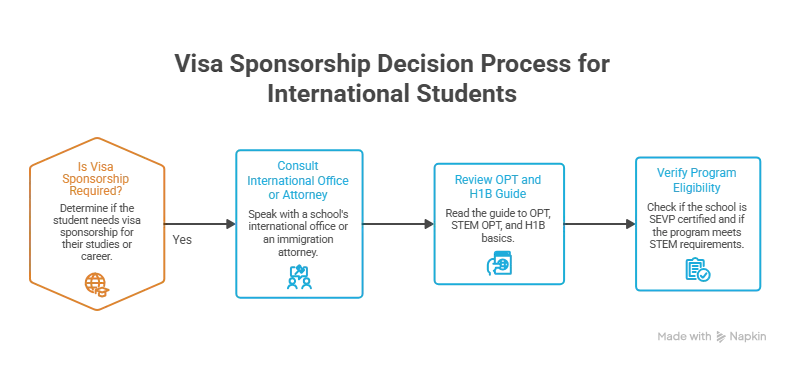
International readers face a rule that changes this comparison. Optional Practical Training requires full time study at an SEVP certified school, and the STEM OPT extension requires a bachelor’s degree or higher in an eligible STEM field from an accredited, SEVP certified school, according to DHS’s Study in the States site. A typical bootcamp does not fit those requirements.
If sponsorship is part of your plan, talk to a school’s international office or an immigration attorney before you pay anyone. Our guide to OPT, STEM OPT, and H1B basics covers the next steps.
The Hybrid Route Most People Overlook
You do not have to choose forever. Build a base with a cheap foundation, earn one associate certification, and take an entry role such as help desk, junior sysadmin, or cloud support. Then add a part time degree, and ask whether your employer helps with tuition. BLS says network and computer systems administrators typically need a bachelor’s degree, so the degree still opens doors later, and you are earning while you study. Our guide on how to get your first cloud job walks through those entry roles.
Four Salary Myths About Cloud Bootcamp vs Degree
Myth 1: A bootcamp gets you the same pay as a degree for life. Nucamp’s 2026 analysis reports a mid career gap of 20 to 25%. The gap is small early and wider later.
Myth 2: A degree guarantees a cloud job. The New York Fed reported 7.0% unemployment for recent computer science graduates in its 2024 data, and says conditions stayed challenging through the second quarter of 2026.
Myth 3: Certifications alone replace both. They help you win interviews. Cloud training authors agree the first job is the hardest to land, so pair certs with projects.
Myth 4: The placement rate on the bootcamp’s website is your odds. One 2026 analysis puts the average near 79% within six months, and definitions of “placed” vary. Ask for audited reporting and read our guide to verifying bootcamp placement rates.

Salary Growth Timeline: Year 0 to 10
| Stage | Reported range | What drives it |
| Year 0 to 1 | $70,698 (bootcamp average) to $87,000 (CS bachelor’s, NY Fed) | Entry role, certs, projects |
| Years 2 to 3 | $80,943 to $99,229 (Course Report second and third jobs) | First job change |
| Years 5 to 7 | Moves toward the Indeed and Glassdoor averages, $135,619 to $150,737 | Specialty skills, better leveling |
| Year 10 and beyond | Up to about $237,729 at the Glassdoor 90th percentile | Architect scope, leadership |
Growth speeds up when you switch employers every two to three years early on, specialize in an in demand area like cloud security or Kubernetes, and push for the right level at hire. It slows when you sit too long in a help desk role or get leveled too low at the start. These ranges come from different sources, so treat them as a map, not a forecast. Compare roles in our DevOps vs cloud engineer vs SRE salary guide.
When to Stop Researching and Start Deciding
More research past a point is just delay. Give yourself two weeks, then act. Here is what I would do:
- Ask any bootcamp for audited outcomes by cohort, including job titles, salaries, and how many graduates counted as placed.
- Spend a month on free cloud provider training and a free tier account before paying anyone. If you hate it, you just saved $14,000.
- Price the degree at in state public rates first, then compare.
- When an offer arrives, counter once, ask about RSUs and the signing bonus, and use a competing offer if you have one. Ask for a day or two before you answer.
Frequently Asked Questions
Is a cloud bootcamp worth it?
It can be, if the program publishes audited placement data and you already have some IT basics. One 2026 analysis puts bootcamp placement near 79% within six months, so roughly one in five graduates is still searching. Check outcomes before paying.
Can you get a cloud engineer job without a degree?
Yes. Coursera notes that some employers prefer a bachelor’s degree but it is not required, and certifications plus projects can open doors. BLS lists a bachelor’s as the typical entry requirement for related roles, so expect more competition without one.
How long does a bootcamp take to pay off?
Tuition of about $13,584 pays back within months once you land a job paying around $70,000. The harder question is how long the job search takes. Your payback clock starts at your first paycheck, not on graduation day.
Do employers prefer a degree or certifications for cloud jobs?
It depends on the role and employer. Degrees help with campus recruiting and with roles that list a bachelor’s. Certifications help you win interviews, but cloud training authors say they will not land the job alone.
How much do entry level cloud engineers make in the US?
Estimates range from about $101,337 (PayScale via DataCamp) to $110,000 to $130,000 (KORE1). Bootcamp graduates report an average first tech salary near $70,698 across all tracks. The gap comes from job titles and how each source collects data.
Is a computer science degree still worth it in 2026?
The pay is still strong, with early career wages around $87,000 per the New York Fed. Hiring is tough, though: recent computer science graduates had 7.0% unemployment in 2024 data. A degree helps most when paired with internships and projects.
Which cloud certification should I start with?
Most beginner paths begin with an associate level exam, such as AWS Solutions Architect Associate or Google Associate Cloud Engineer. Pick the provider you see most in local job listings. See our AWS certification roadmap.
Share Your Experience
Did you take a bootcamp, finish a degree, or mix both? Tell me in the comments what your first offer looked like, what you negotiated, and what surprised you.
How This Article Was Created
Salary figures came from the Bureau of Labor Statistics (May 2024 and May 2025 data), KORE1’s 2026 salary guide summarizing Glassdoor and Indeed, PayScale via DataCamp, the New York Fed’s college labor market data (2024 outcomes, with its status note through the second quarter of 2026), and the College Board’s 2025 tuition report. Bootcamp figures came from Course Report data relayed by Metana and from Nucamp and placement analyses published in 2026. Visa details came from DHS’s Study in the States site.
I did not invent any figure. The napkin math, the Sam and Priya offers, and the four year tuition totals are labeled as my own arithmetic or hypotheticals. Several bootcamp numbers are self reported or come from secondary roundups, so verify them against the original sources before you make a financial decision. I wrote this to inform job seekers, not to recruit for or advertise any program.

Shahzada Muhammad Ali Qureshi (Leeo)
I’m Shahzada — a software engineer by education and an SEO professional by trade. I built WhatIsTheSalary.com to go beyond just showing salary numbers — every page is manually researched across sources like BLS, Glassdoor, LinkedIn Salary, and PayScale to give you the full picture in one place. If you found what you were looking for here, that’s exactly the point.