TLDR
Software engineer salary in Estonia is one of the most searched topics by developers eyeing the Baltics, and for good reason. “whatisthesalary.com“
Estonia punches way above its weight. A country of 1.3 million people built one of the most digitally advanced economies on the planet, home to Skype, TransferWise (now Wise), and over 100 unicorn-per-capita startups. Yet many engineers still have no clear picture of what they’d actually earn there.
Here’s the problem: salary data for Estonia is all over the place. Some sources quote figures in gross, others net, some include Tallinn only, others mix remote and on-site roles. It’s messy.
This guide cuts through the noise. You’ll get real salary ranges by experience level, a breakdown of what impacts your pay, and an honest comparison to help you decide whether Estonia makes financial sense for your next move.
Software Engineer Salary in Estonia (2026)
Average Salary Range: €1,800–€7,000 Gross Per Month
The average software engineer salary in Estonia sits at around €40,000–€65,000 gross per year in 2026, which translates to roughly €3,300–€5,400 per month. That said, the full range is wide.
According to data from Levels.fyi, SalaryExpert, and TechPays Europe, the Estonia software engineer salary picture looks like this in 2026:
| Level / Role | Annual Gross (€) | Monthly Gross (€) | Location | Source |
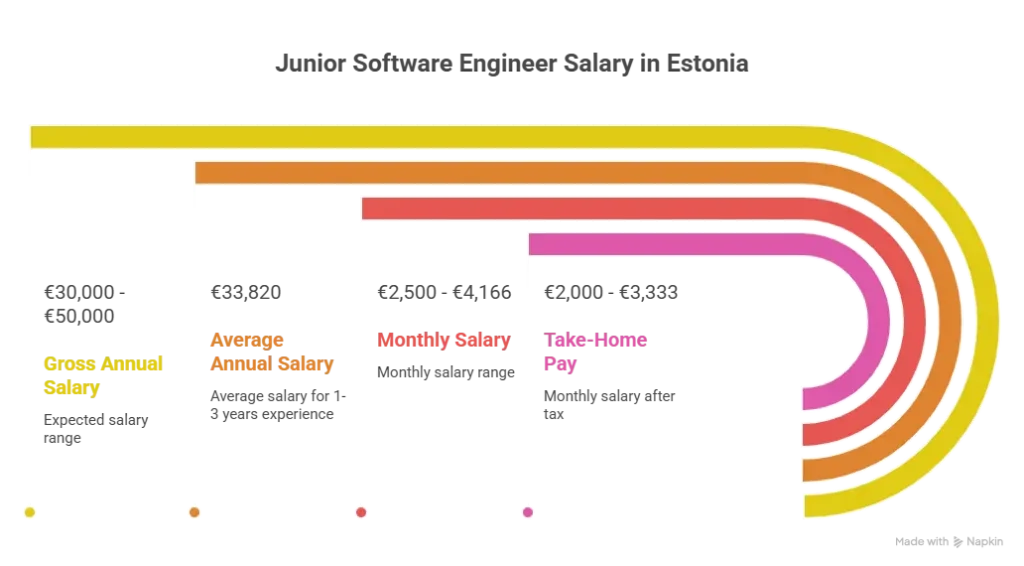
| Junior (1–3 yrs) | €30,000 – €50,000 | €2,500 – €4,166 | Estonia | SalaryExpert, Levels.fyi |
| Mid-level (3–6 yrs) | €50,000 – €78,000 | €4,166 – €6,500 | Estonia | TechPays, Levels.fyi |
| Senior (6–8+ yrs) | €78,000 – €90,000+ | €6,500 – €7,500+ | Estonia | Glassdoor, SalaryExpert |
| Avg. SE – Tallinn | €48,279 – €66,608 | €4,023 – €5,550 | Tallinn | SalaryExpert, Levels.fyi |
| Bolt (SE) | €83,200 – €149,000 | €6,933 – €12,416 | Tallinn | Levels.fyi (Apr 2026) |
| Wise (SE) | €40,300 – €86,200 | €3,358 – €7,166 | Estonia | Levels.fyi (Apr 2026) |
| Avg. SE – Tartu | €35,000 – €55,000 | €2,916 – €4,583 | Tartu | Glassdoor, Levels.fyi |
Sources: Levels.fyi (April 2026), SalaryExpert (2026), TechPays Europe (2026), Glassdoor (March 2026)
For context, the overall average salary in Estonia across all sectors is roughly €1,300–€1,500 net per month. Software engineers earn significantly more, especially in Tallinn where the startup density is highest.
When comparing software engineer salary in Europe more broadly, Estonia pays lower in absolute terms than Germany, the Netherlands, or the UK — but cost of living is also considerably lower, and the purchasing power parity tells a different story.
Salary by Experience Level
Entry-Level / Junior Developer (€30,000–€50,000/year)
If you are just starting out in your software engineering career in Estonia, expect a gross annual salary between €30,000 and €50,000. The junior developer salary in Estonia (EE) averages around €33,820 per year for engineers with 1–3 years of experience, based on SalaryExpert’s 2026 data.
At the monthly level, that comes out to roughly €2,500–€4,166 gross. After Estonia’s flat income tax rate of 20%, take-home pay will be lower, though social security contributions are also manageable compared to many EU countries.
Junior engineers working at early-stage startups or smaller software houses tend to sit at the lower end of this range. Those hired by fintech or mobility companies right out of university, especially with strong skills in JavaScript, Python, or Go, can clear the €40,000 mark.
Want to boost your chances of landing a higher-paying role? Focus on building a strong software engineer portfolio and mastering in-demand languages.
Mid-Level Software Engineer (€50,000–€78,000/year)
Mid-level engineers with 3–6 years of experience represent the bulk of the software engineering workforce in Estonia. According to Levels.fyi and TechPays Europe, this group earns between €50,000 and €78,000 gross per year.
At this level, Estonian employers expect you to own features end-to-end, mentor juniors, and contribute to architectural decisions. The compensation reflects that responsibility. If you are working for a product company rather than a service firm, expect the salary to skew toward the higher end of this band.
If you are thinking about the long-term trajectory, check out the full breakdown of the software engineer career path to understand where mid-level roles lead.
Senior Software Engineer (€78,000–€90,000+ /year)
Senior software engineers in Estonia are the highest earners in the individual contributor track. The Estonia senior software engineer salary typically starts at €78,000 and can comfortably exceed €90,000 per year at top companies.
Glassdoor data from 2025–2026 shows the senior software engineer pay range in Tallinn sitting between €4,183 and €7,100 per month, with top earners (90th percentile) hitting €7,100/month gross. At Bolt specifically, senior-level compensation goes even higher due to equity and bonus components.
With 8+ years of experience, SalaryExpert puts the average senior software engineer salary in Estonia at €54,890, though this figure reflects base salary only. Total compensation including stock and bonuses at product companies pushes that number considerably higher.
Wondering how to stand out at the senior level? These software engineer interview questions guide can help you prepare for senior-level hiring rounds.
Salary by Location
Tallinn: Highest Paying City (€50,000–€89,000 Average)
Tallinn is the undisputed tech hub of Estonia. As the capital and home to the country’s biggest startups and unicorns, it pays meaningfully more than anywhere else in the country.
According to SalaryExpert’s 2026 data, the average software engineer gross salary in Tallinn is €48,279 per year — around 19% higher than the national Estonian average. Levels.fyi puts the average total compensation even higher at €66,608, with a range from €50,096 to €78,378.
Tallinn software engineer pay benefits from the concentration of high-growth companies, international tech investment, and a competitive talent market. The city’s tech scene includes not just Bolt and Wise, but dozens of fast-growing scale-ups across fintech, logistics, cybersecurity, and SaaS.
Thinking of building your career in Tallinn? Understanding the full software engineer career options available in tech hubs like this one is a good starting point.
Other Cities: Tartu and Beyond
Tartu, Estonia’s second-largest city and home to the University of Tartu, is the main alternative tech market. The city has a growing startup ecosystem driven by deep tech, biotech, and edtech companies, though salaries are lower than Tallinn.
Glassdoor data from early 2026 shows software developers in Tartu earning between €2,044 and €3,744 per month. Levels.fyi data for senior software engineers in Tartu puts the range at €48,929–€89,666 per year, showing that senior talent can still command strong pay even outside the capital.
Other cities like Narva and Pärnu have very limited tech job markets and salary data is sparse. If you are relocating to Estonia specifically for a software engineering role, Tallinn is the clear primary destination.
Top Paying Companies in Estonia
Bolt, Wise, Glia, and Bondora
Estonia punches well above its weight in terms of homegrown tech companies. Here is what the top employers are paying software engineers in 2026:
Bolt: The ride-hailing and micromobility unicorn is the highest-paying employer for software engineers in Estonia. Bolt software engineer compensation ranges from €83,200 to €149,000 per year, with a median total compensation of €89,700 according to Levels.fyi (April 2026). Backend engineers at Bolt earn between €82,400 and €90,900/year at L4–L5 levels. The average total compensation for software engineers at Bolt sits at approximately €89,214–€89,333, based on TechPays Europe data.
Wise: The global fintech company co-founded by Estonian entrepreneur Taavet Hinrikus offers software engineer salaries in Estonia ranging from €40,300 to €86,200 per year. The median total compensation at Wise for engineers in Estonia is around €67,700, with top earners exceeding €95,000 in total comp (Levels.fyi, April 2026).
Glia: This customer communication platform, headquartered in New York with a significant engineering hub in Tallinn, offers competitive tech compensation in Estonia. Glia is known for strong engineering culture and compensation packages that include equity components, making it attractive for senior engineers.
Bondora: One of Estonia’s original fintech success stories, Bondora offers solid software engineering compensation, particularly for engineers with fintech or data engineering experience. Salary data points are limited, but the company is consistently listed among the better-paying employers in Tallinn’s tech scene.
Beyond these four, other notable employers paying strong software engineering salaries in Estonia include Pipedrive, Skype (the company that essentially started Estonia’s tech revolution), Twilio, and a growing number of international companies with Estonian development centers.
Software Engineer Role Overview
Typical Responsibilities
Software engineers in Estonia work across a wide range of domains, from mobile and web development to backend systems, data engineering, and cloud infrastructure. The day-to-day varies by company size and stack, but common responsibilities include:
In Estonia’s startup-heavy environment, engineers often wear multiple hats, especially at earlier-stage companies. This can mean exposure to a broader tech stack and faster career growth, though the workload can be higher.
If you are evaluating whether to move into software engineering or want to sharpen your technical edge, these software engineering practices are worth understanding in depth.
Common Career Path
The typical software engineering career path in Estonia follows a fairly standard progression: Junior > Mid-level > Senior > Staff/Lead > Principal or Engineering Manager. The timeline varies, but most engineers reach the senior level within 5–8 years.
What sets the Estonian market apart is that startup exposure often accelerates progression. Engineers at companies like Bolt or Wise tend to move faster through levels because the scope of impact is broader and the feedback cycles are tighter.
Want the full picture? Here is a comprehensive look at the software engineer career path from entry-level to principal.
Also worth reading: how long it takes to become a software engineer — the timeline might be shorter than you think.
Salary Negotiation Tips for Estonia
After 5 Years of Experience: What to Expect
At the 5-year mark, you are likely transitioning from mid-level to senior, which is one of the biggest salary jumps in the Estonian tech market. This is the moment to negotiate proactively rather than waiting for an annual review.
Engineers with 5 years of solid, verifiable experience in modern stacks (React, Node.js, Go, Kubernetes, AWS/GCP) can reasonably target €65,000–€80,000/year at established companies, and €80,000+ at Bolt-tier employers. At this stage, equity and bonuses also become a meaningful part of total compensation, so do not just focus on base salary.
Use tools like Levels.fyi, TechPays Europe, and the Estonia salary calculator on platforms like SalaryExpert to benchmark your ask before entering any negotiation conversation.
How to Negotiate Higher Pay
Negotiating salary in Estonia follows similar principles to other European tech markets, but there are a few local nuances worth knowing:
Lead with data: Estonian recruiters and hiring managers respect market data. Come in with specific salary ranges from platforms like Levels.fyi and TechPays. Vague assertions are weak; specific numbers backed by sources are strong.
Highlight measurable impact: Estonia’s tech companies value engineers who ship results. If you have reduced infrastructure costs, improved system reliability, or led a product that grew revenue, say so with numbers.
Know your stack’s premium: Certain skills command premiums in the Estonian market. Cloud-native development (AWS, GCP), distributed systems, fintech compliance engineering, and machine learning all attract higher compensation.
Consider competing offers: Having a competing offer from another company is the most effective negotiating tool. Even if you are not actively interviewing, the Estonian market is active enough that you can generate competing interest within a few weeks.
Do not leave equity on the table: At companies like Bolt or Wise, equity (stock options or RSUs) can represent 20–40% of total compensation. Always negotiate the equity component alongside base salary.
For help presenting yourself effectively during hiring, this software engineer cover letter guide will help you stand out from the first touchpoint.
And if you are just getting into the field, here is how you can become a software engineer without a degree and still command competitive salaries in the Estonian market.

Also read: Software Engineer Salary in Switzerland 2026: Complete Guide
Frequently Asked Questions
-
What is the highest software engineer salary available in Estonia?
The highest reported software engineer salaries in Estonia come from Bolt, where total compensation can reach €148,000–€149,000 per year at senior levels (L5–L6), according to Levels.fyi data from April 2026. This includes base salary, performance bonuses, and equity components.
-
What data sources were used to calculate these salary figures?
This article draws on verified, publicly available compensation data from Levels.fyi (updated April 2026), SalaryExpert by ERI (2026 employer survey data), TechPays Europe (79+ Estonia data points), and Glassdoor employee-reported salaries from early 2026. Multiple sources were cross-referenced to provide the most accurate ranges possible.
-
Is software engineering a good career choice in Estonia?
Yes. Estonia’s tech sector is one of the most dynamic in Northern Europe. With strong English proficiency across the workforce, a business-friendly regulatory environment, and homegrown unicorns like Bolt and Wise, software engineers in Estonia enjoy solid salaries relative to cost of living and genuine career growth opportunities.
-
How does the Estonia average salary compare for software engineers?
The average salary in Estonia across all industries is roughly €1,300–€1,500 net per month. Software engineers earn significantly more, with average gross monthly salaries ranging from €3,300 at the lower end to €5,500+ for experienced engineers. Tech compensation in Estonia is well above the national average.
-
Do companies in Estonia offer remote work for software engineers?
Yes, remote and hybrid work is widely accepted in Estonia’s tech sector. Many Estonian companies, particularly those with international operations or remote-first cultures, hire engineers from across Europe. Tallinn-based companies like Bolt and Wise have structured hybrid policies for local employees while also maintaining distributed teams.
-
What programming languages are most in demand in Estonia?
The most in-demand languages in Estonia’s tech market include JavaScript and TypeScript, Python, Go, Java, and Kotlin. Cloud skills (AWS, GCP, Kubernetes) and experience with microservices architectures are also highly valued. Engineers with niche skills in fintech or distributed systems tend to command premium salaries.
Check out our guide on the best programming languages to learn to see which ones offer the best return on investment for your career.
-
How do I become a software engineer and work in Estonia?
You typically need a bachelor’s degree in computer science or a related field, though portfolio projects and bootcamp graduates are increasingly considered by Estonian startups. Work permits for skilled tech professionals are relatively straightforward to obtain in Estonia, and the country offers a digital nomad visa for remote workers.
Read our full guide on how to become a computer programmer for a step-by-step roadmap.
Conclusion
Estonia is a genuinely compelling destination for software engineers in 2026. The combination of a thriving startup ecosystem, competitive tech salaries relative to cost of living, and a digital-first culture makes it one of Europe’s more interesting career markets.
The software engineer salary in Estonia ranges from around €30,000/year for entry-level developers to over €90,000 for senior engineers — and considerably more at companies like Bolt. Tallinn remains the best-paying city, but Tartu is catching up, especially in niche tech domains.
Whether you are a local developer benchmarking your current compensation, or an international engineer considering a move, the data points are clear: Estonia rewards engineering talent well, and the market is only getting more competitive.
To continue building your career, explore these software engineer skills required to understand what top Estonian employers are looking for in 2026.
And if you want to understand how Estonia stacks up in role definitions, the software engineer vs software developer breakdown covers the key distinctions hiring managers make.
Related Resources
• Software Engineer Career Guide • Coding Interview Preparation • Best Programming Languages

Shahzada Muhammad Ali Qureshi (Leeo)
I’m Shahzada — a software engineer by education and an SEO professional by trade. I built WhatIsTheSalary.com to go beyond just showing salary numbers — every page is manually researched across sources like BLS, Glassdoor, LinkedIn Salary, and PayScale to give you the full picture in one place. If you found what you were looking for here, that’s exactly the point.