
TL;DR
Software Engineer Salary in Australia — unlock the exact tactics that turn an offer into the one you really want. Whether you’re a grad, mid‑level developer, or seasoned lead, this short guide shows the negotiation moves hiring managers respect: “Check Salary“
benchmark with city‑specific data, frame wins as business impact, ask for packaged compensation (base, bonus, equity, and perks), and time your ask after a clear achievement or final interview.
Start with proof: a one‑page achievement summary and realistic salary range, then present flexible options (higher base, signing bonus, or extra leave) to show you’re reasonable and strategic. Use clear, confident language, ask one precise number, and close by confirming next steps and timelines.
Ready to negotiate? Practice the script out loud, know your minimum, and treat the conversation as collaboration — you’re solving a hiring problem together, not demanding a favor.
Are You Leaving Money on the Table?
I have spoken with engineers who accepted offers they were not sure about because they did not know how to push back. One senior engineer I know took a Sydney role at AUD $145,000 when the approved band went up to AUD $168,000. The recruiter never mentioned that gap. He only found out after he joined.
That kind of information gap is what this article is here to close. If you are reading this, you are either evaluating an offer right now or preparing for a negotiation coming up soon. Either way, the data and tactics here are based on what actually works in the Australian tech market in 2026.
What the Australian Market Actually Pays in 2026
Before you can negotiate, you need a number to negotiate toward. Here is what the data shows across sources.
According to Levels.fyi (updated May 2026), the average total compensation for a software engineer in Australia is AUD $148,276, with a range from AUD $112,932 to AUD $186,206. In Sydney specifically, that average climbs to AUD $155,869.
Canva leads all employers in Sydney with an average total comp of AUD $262,210. For a deeper breakdown of software engineer salary in Australia, the full city and seniority data helps you benchmark your exact situation.
PayScale puts the median base at AUD $90,295, which reflects a broader mix of employers including smaller firms that do not offer equity. SalaryExpert reports an average gross of AUD $157,168, based on employer survey data. These platforms measure different slices of the market, so cross-referencing is not optional, it is the minimum research you should do before any negotiation.
Software Engineer Salary in Australia by Source (2026)
| Source | Average / Range (AUD) | What It Measures |
| Levels.fyi | $148,276 avg / $112K-$186K | Total comp, self-reported, larger firms |
| SalaryExpert | $157,168 gross avg | Employer surveys, national |
| PayScale | $90,295 median base | Broad mix, includes SMEs |
| SEEK | $100K-$120K range | Job ad data, base salary focus |
| Glassdoor (Sydney) | $90K-$120K typical | 15,000+ self-reported submissions |
| Indeed | $107K avg | Job posting + survey data |
What You Should Earn at Each Experience Level
Experience level is the biggest factor in your negotiation anchor. Here is where the data lands for 2026.

Entry Level (0 to 2 Years)
Graduate software engineer salary in Australia starts between AUD $70,000 and AUD $95,000 according to Glassdoor and PayScale 2026 data. Atlassian and Canva push that to AUD $85,000 to AUD $95,000 for grads. If you are just starting out, it helps to know exactly what junior software engineers earn in Australia so you can counter a lowball offer with real numbers instead of just feeling like something is off.
Mid Level (3 to 6 Years)
Mid-level engineers in Australia typically earn AUD $110,000 to AUD $140,000. At multinationals and funded startups, total comp can push to AUD $150,000 or more when bonuses and equity are included. The mid-level software engineer salary in Australia breakdown shows where employer type creates the biggest spread in this bracket. Switching companies at this stage is statistically the fastest way to jump salary bands.
Senior Level (7+ Years)
Senior engineers at established tech companies in Australia earn AUD $150,000 to AUD $200,000+ in total compensation, with specialists in AI, cloud, and SRE pushing beyond that. The senior software engineer salary in Australia data confirms that the ceiling at multinationals is substantially higher than at local companies. At this level, RSU negotiation matters more than haggling over base.
Software Engineer Salary by Experience Level in Australia (2026)
| Experience Level | Typical Base (AUD) | Total Comp Range (AUD) | Source |
| Graduate / Entry (0-2 yrs) | $70,000 – $95,000 | $70K – $100K | Glassdoor / PayScale 2026 |
| Mid-Level (3-6 yrs) | $110,000 – $140,000 | $115K – $155K | Levels.fyi / SEEK 2026 |
| Senior (7+ yrs) | $150,000 – $200,000+ | $160K – $220K+ | Levels.fyi / SalaryExpert 2026 |
| Staff / Principal | $180,000 – $250,000+ | $200K – $280K+ | Levels.fyi (Canva, Atlassian) |
Why Base Salary Is Only Part of the Story
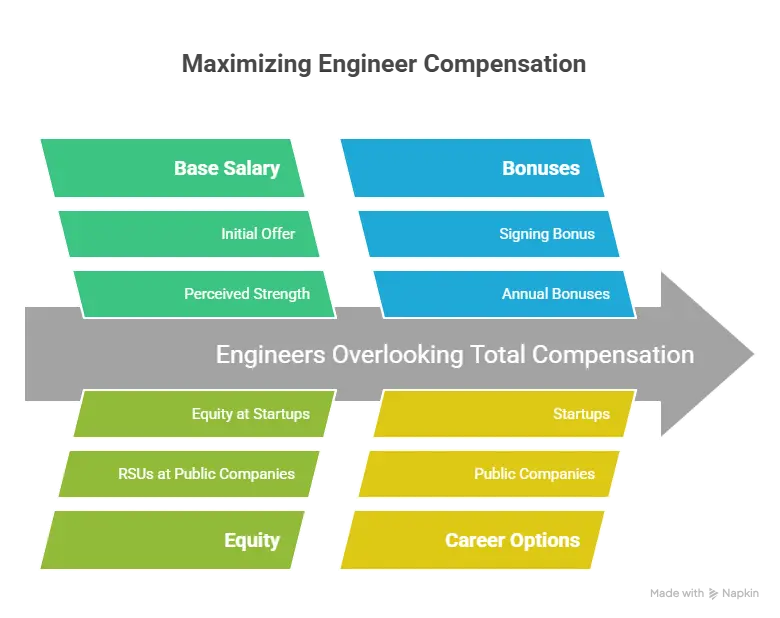
Most engineers look at the base salary number and stop there. That is a mistake that costs real money.
Here is a scenario. A senior engineer in Melbourne receives an offer with a base of AUD $155,000. That sounds strong. But the company also offers AUD $30,000 in annual RSUs vesting over four years and a AUD $15,000 signing bonus. That brings first-year total compensation to AUD $200,000, and year two onward to AUD $185,000 once the signing bonus drops off.
Understanding software engineer career options and how compensation structures differ across employer types is what separates engineers who negotiate well from those who just accept what is offered. RSUs at a public company like Atlassian are actual shares. Equity at a pre-IPO startup is a future promise with more risk attached.
The Superannuation Guarantee sits at 12% in 2026, which adds meaningful value on top of base. Always account for super when comparing Australian offers. A AUD $140,000 base with 12% super is AUD $156,800 in direct annual pay before any bonus or equity.
Sydney vs Melbourne vs Brisbane: Where You Live Changes What You Earn
Sydney software engineers earn 8% above the national average, according to Robert Half salary data. Melbourne and Brisbane sit around 2% above average. Perth, with its mining tech sector, also runs above the national baseline. The full software engineer salary in Sydney Australia 2026 breakdown shows how much the city premium is worth in dollar terms.
If you are relocating for a role, factor in cost of living alongside the salary offer. A AUD $160,000 salary in Sydney and a AUD $145,000 salary in Brisbane may result in similar after-rent take-home depending on where you live and how you live. Do not let a higher headline number blind you to a worse financial position.
Software Engineer Salary by City in Australia (2026)
| City | Avg Annual Salary (AUD) | vs National Avg | Notable Employers |
| Sydney | $155,869 total comp | +8% | Canva, Atlassian, Google, AWS |
| Melbourne | $110K – $130K base | +2% | REA Group, Seek, CBA Tech |
| Brisbane | $105K – $120K base | +2% | Suncorp, Flight Centre Tech |
| Perth | $105K – $122K base | Above avg | Mining tech, govt defence |
| Canberra | $110K – $130K base | Above avg | Government digital services |
What Actually Moves Your Salary in Australia
Not every engineer at the same level earns the same. These are the variables that genuinely shift the number.
If you are thinking about which skills to build for higher earning potential, the best programming languages to learn for salary growth is worth reading before your next performance cycle or job search.
How to Negotiate Your Software Engineer Salary in Australia
Here is the part most articles skip: the actual tactics.
1. Do Your Research Before You Respond to Any Offer
Pull data from at least two sources before you pick a number. Levels.fyi shows total comp at larger firms. SEEK shows what job ads are posting right now. Glassdoor shows what employees report. If these three sources disagree, you now have a range, and that range is your negotiation window.
Robert Half notes that Sydney engineers should expect 8% above the national average. If you are being offered the national average for a Sydney role, that is an immediate opening.
2. Never Accept the First Offer Without Countering
A recruiter once told me that the first offer is almost always below the approved band. The company expects a counter. When you accept immediately, you signal either that you did not research the market or that you are not a confident negotiator. Neither impression helps you long-term.
Express genuine enthusiasm for the role first. Then ask for time to review the details. Then send your counter in writing, referencing the market data you have found.
3. Use Competing Offers as Your Strongest Lever
A real competing offer from another company is the single most effective negotiation tool available to you. It gives the recruiter a number to match or beat, and it removes the guesswork from both sides.
Apply to multiple companies at once. When you receive your first offer, professionally update other companies in your pipeline that you have an offer with a deadline. Most will accelerate their process. Even a smaller offer from a less prestigious company gives you ground to stand on.
4. Negotiate RSUs and Signing Bonus Separately From Base
Base salary hits the company’s payroll permanently and creates internal pay equity conversations. RSU grants and signing bonuses are often approved from separate budgets with more flexibility.
If a hiring manager tells you the base cannot move, believe them. Then ask specifically about the RSU grant and the signing bonus. These are where the most movement is typically available. Understanding which programming languages command equity-rich offers also positions you to ask for a higher level, not just more pay at the same level.
5. Negotiate Your Level, Not Just Your Pay
If you have evidence that your experience aligns with the next level up, make that case during the offer stage. Moving from mid-level to senior on the offer alone can mean AUD $20,000 to AUD $40,000 more in base, plus a higher RSU grant and a larger bonus target.
A well-written software engineer cover letter sets this up before you even get to the offer. If you have framed your experience at the right level throughout the process, the level conversation at offer stage is easier to have.
Negotiation Lever Comparison for Australian Software Engineers
| Lever | Flexibility | Best Used When | Typical Outcome |
| Base Salary | Low to Medium | Competing offer in hand | 5-15% increase possible |
| RSU / Equity Grant | High | Base hits a ceiling | AUD $10K-$40K more in grants |
| Signing Bonus | High | You are leaving unvested equity | AUD $10K-$30K one-time |
| Level / Title | Medium | You have strong evidence of scope | AUD $20K-$40K jump in base |
| Super Contribution | Low | Smaller employers | Extra 1-2% above guarantee |
| Start Date / Remote | High | Non-salary terms matter | Flexibility or notice offset |
4 Salary Misconceptions That Cost Australian Engineers Money
1. The national average is a useful benchmark for Sydney roles. It is not. Sydney pays 8% above the national average for software engineers. Benchmarking a Sydney offer against the national figure means you are comparing against a number that includes regional cities and local firms where the market is genuinely lower.
2. You will lose the offer if you negotiate. This almost never happens. Recruiting a software engineer costs the company up to AUD $50,000 in time and fees. A polite counter does not undo that investment. The offer is not pulled. What happens when you do not negotiate is that you leave money behind permanently.
3. Base salary is the most important number. At multinationals like Atlassian, Canva, and Google, RSUs can represent 30 to 50% of total compensation at senior levels. Optimising base while ignoring equity is like negotiating the price of one wheel on a car.
4. More research will tell you when you are ready to negotiate. It will not. There is a point where more data becomes delay. If you have two or three consistent data points from credible sources, you have enough to counter. Waiting for certainty is a way of avoiding the conversation.
How Your Starting Point Affects Your Negotiation Position
Engineers who planned their career well from the beginning are in a stronger negotiating position at every stage. If you are still early in the process and thinking about how to become a computer programmer, the choices you make now about specialisation and employer type will determine what leverage you have five years from now.
Engineers who start at a multinational, even at a lower level, tend to carry a higher salary trajectory than those who start at an SME. The brand name opens doors, and the experience accelerates leveling. That leveling history is what gives you the evidence to negotiate upward at each move.
Realistic Salary Growth Timeline: Year 0 to Year 10+

Also read: Software Engineer Salary Australia 2026: $75K–$200K+ Complete AUD Guide
Frequently Asked Questions
-
How much can I negotiate on a software engineer salary in Australia?
Most engineers in Australia can negotiate 10 to 20% above the first offer when they have market data and a competing offer in hand. RSUs and signing bonuses often have more room than base salary. Even without a competing offer, a polite counter backed by Levels.fyi or SEEK data typically moves the number.
-
Is it normal to negotiate a software engineer salary in Australia?
Yes, and it is expected. Recruiters set the first offer below the approved band in most cases. Robert Half data shows 79% of tech workers find negotiation harder than ever, which means most are not doing it effectively. That gap is your opportunity.
-
What is the best way to negotiate a software engineer salary in Australia?
The most reliable approach is to have a real competing offer, reference specific market data from at least two sources, and counter the full package rather than just base. Ask about RSUs and signing bonus separately if the base cannot move. Express enthusiasm for the role throughout so the conversation stays collaborative.
-
Should I disclose my current salary when negotiating in Australia?
You are not required to. Framing your answer around market rate rather than personal salary history is the stronger approach. Say you are targeting AUD X based on what the market shows for this level in this city, rather than anchoring to what you currently earn. The latter can cap your offer unnecessarily.
-
When is the best time to negotiate a software engineer salary offer?
Once you have a formal written offer. Negotiating before the offer weakens your position because the company has not yet committed. Wait for the offer, express interest, then take one or two business days to review it before sending your counter. Do not counter multiple times. One well-prepared counter is more effective than several rounds of small asks.
-
Do Australian tech companies offer RSUs?
Yes, at larger companies they do. Atlassian, Canva, and Australian arms of multinationals like Google, Amazon, and Salesforce all include RSU packages. For publicly traded companies, RSUs are actual shares. For pre-IPO startups, equity is in the form of options with more risk attached. Always ask for the vesting schedule, cliff period, and the assumed valuation behind any equity quote.
-
What if I do not have a competing offer?
Focus on market data instead. Reference Levels.fyi, SEEK, and Glassdoor numbers for your level, city, and employer type. You can say you are seeing a range of AUD X to AUD Y for this role in this market, and that you were hoping the offer could reflect the upper end of that range. It is a factual statement, not a bluff.
Share Your Experience
If you have negotiated a software engineer offer in Australia recently, I would love to hear what worked. Did a competing offer move the number? Did asking about RSUs separately get you somewhere? Real outcomes from real engineers help everyone here calibrate better than any survey data can. Leave your story in the comments.
How This Article Was Created
Salary figures in this article come from Levels.fyi (updated May 2026), SalaryExpert (2026 employer survey data), Glassdoor (2026 submissions), PayScale (2026 base salary data), SEEK job ad data, Robert Half 2026 Salary Guide for Australia, and Lemon.io 2026 contract rate data based on 1,304 records. No figures were fabricated or estimated without a cited source. All data reflects Q1 and Q2 2026. This article was written to help software engineers in Australia negotiate from an informed position, not to recruit for any employer or promote any platform.

Shahzada Muhammad Ali Qureshi (Leeo)
I’m Shahzada — a software engineer by education and an SEO professional by trade. I built WhatIsTheSalary.com to go beyond just showing salary numbers — every page is manually researched across sources like BLS, Glassdoor, LinkedIn Salary, and PayScale to give you the full picture in one place. If you found what you were looking for here, that’s exactly the point.