TLDR
Picture two engineers applying for the same role. One sends 200 applications and hears silence. The other sends 10 and lands three interviews. Same skills, different method.
That gap sits at the heart of How to Find a Tech Job in the US in 2026. Ashby’s data shows only 3% of inbound applications reach an interview, while 40% of referred candidates do. Add ghost postings, new H-1B and OPT rules, and offers that hide pay inside stock, and guessing gets expensive.
Here is the fix I recommend: pick one role, earn a referral before you apply, and check real tech salary data before you say yes to any offer. The steps below show you how.
What the 2026 Tech Job Market Really Looks Like
The headlines contradict each other, so I checked the sources. CompTIA’s October 2 release shows 272,040 new IT postings in September, up 16% from a year earlier, with tech unemployment at 3.3% against 4.2% nationally.
Indeed Hiring Lab tells a more cautious story. Software development postings have risen about 15% since February 2025, yet they remain 27.5% below pre-pandemic levels. Senior roles drove 71% of the net increase from May 2025 to May 2026.
Both can be true. Demand favors experienced engineers and AI skills. The New York Fed puts recent computer science graduates near 6% to 7% unemployment, above the roughly 5.7% rate for all recent graduates.
The long view looks healthy. The BLS projects 15% growth for software developers, QA analysts, and testers from 2024 to 2034, and software developers earned a median $133,080 in May 2024.
How to Find a Tech Job in the US in 2026: 7 Steps That Work
Step 1: Pick one role and one level
Applying to everything makes you look like a fit for nothing. Choose a title, such as software engineer, SDET, site reliability engineer, or data engineer, and a level, such as SDE I at Amazon or L3 at Google. Then read 30 postings and list the skills that repeat.
Level matters. CompTIA found only 20% of March postings targeted zero to three years of experience, versus 27% for four to seven years.
Step 2: Build proof, not just a resume
Use a single-column resume that mirrors the posting’s words, because plain layouts parse more reliably in applicant tracking systems. Add two or three projects with a clear README, a live demo, and visible commit history. My ATS resume guide covers formatting.
Step 3: Get a referral before you apply
Ashby analyzed 38 million applications across 93,000 jobs. Inbound applications made up 93.8% of volume, yet only 3% led to interviews. Referrals made up 1% of applications, and 40% reached an interview.
| Application source | Application to interview | Interview to offer | Share of applications |
| Inbound | 3% | 6% | 93.8% |
| Sourced by recruiter | 25% | 6% | 4.8% |
| Referral | 40% | 16% | 1% |
| Agency | 42% | 8% | 0.4% |
| Internal | 42% | 32% | 0.05% |
I would message two or three engineers at each target company about their work, not a job. Ask for a referral after a real exchange. My referral message guide has templates.
Step 4: Apply selectively and spot ghost jobs
Greenhouse found that 18% to 22% of postings on its platform showed no real hiring activity in 2024. Check the company careers page, the posting’s age, and whether a named recruiter appears. Learn to spot ghost jobs in tech before tailoring an application.
Look beyond Big Tech too. CompTIA reported that 16 of the 20 industries it tracks posted more tech jobs in September than in August.
Step 5: Prepare for interviews that may allow AI
Meta has piloted an AI-enabled coding round since late 2025, and May 2026 reports said Google began testing a Gemini-assisted format. Many employers still ban AI tools, so ask the recruiter which format applies. Practice both, plus system design. See my guide to AI-enabled coding interviews.
Step 6: Compare total comp, then negotiate
Base pay is one line. Total compensation adds RSUs, annual bonus, and signing bonus. Say I get two offers. Company A pays a $150,000 base and nothing else. Company B pays a $130,000 base, $120,000 in RSUs over four years, and a $20,000 signing bonus.
Company B’s first-year total is $130,000 plus $30,000 in vested stock plus $20,000, or $180,000, if the stock holds its value. Some companies back-load the vesting schedule, so read it first. My offer negotiation guide goes line by line.
Step 7: Track and adjust every two weeks
Log every application with its channel and result. Ashby’s 3% rate means roughly 33 cold applications per interview. If you pass 30 with no interviews, change the approach instead of adding volume.
Entry-Level Pay by City, and What the Numbers Hide
| Market | Median total comp | 25th percentile | 75th percentile |
| United States | $139,799 | $100,000 | $186,000 |
| Greater Seattle | $177,683 | $157,000 | $192,000 |
| SF Bay Area | $199,116 | $163,000 | $231,000 |
| New York City area | $135,000 | $100,000 | $188,000 |
Levels.fyi skews toward larger employers, which explains why its entry-level median beats the BLS median for all developers. Treat it as a ceiling for many offers.
Cost of living changes the picture. Washington and Texas charge no state income tax on wages, while Bay Area rent eats much of the higher pay. Remote vs on-site matters too, since some employers adjust pay by location.
What H-1B and OPT Changes Mean for Your Search
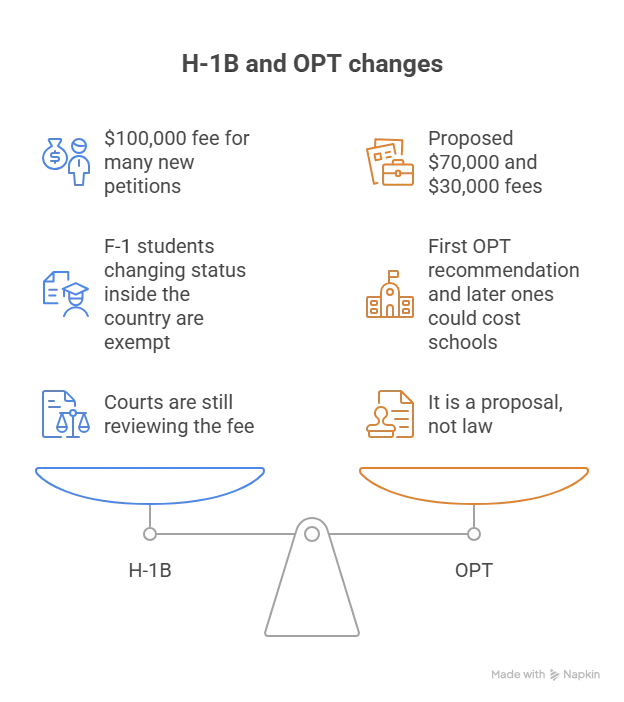
Work authorization now shapes who gets hired. A weighted H-1B selection rule took effect on February 27, 2026, so registrations at higher wage levels get more entries. A $100,000 fee also applies to many new petitions for workers outside the US. Law firm summaries say F-1 students changing status inside the country are exempt, and courts are still reviewing the fee.
OPT unemployment limits remain 90 days, or 150 days with the STEM extension. On October 8, 2026, DHS proposed a $70,000 fee for a student’s first OPT recommendation and $30,000 for later ones, payable by schools, which could pass the cost on. It is a proposal, not law, and comments close November 9.
Tell recruiters your status on the first call, and target employers with a sponsorship record. Confirm details with your school through Study in the States. My H-1B sponsorship guide and OPT job search plan go deeper.
Four Myths That Waste Your Time
- “AI killed developer jobs.” Indeed found US software postings rose about 15% after late February 2025 while all postings fell 7%. Entry-level is hard, not extinct.
- “A CS degree guarantees an offer.” New York Fed data shows computer science graduates still struggle to land a first role.
- “More applications mean more interviews.” Ashby’s inbound offer rate fell from about 7 in 1,000 to 2 in 1,000 between 2021 and 2024 as volume tripled.
- “Only Big Tech hires.” CompTIA’s September data shows tech postings rising across 16 of 20 industries.
When to Stop Researching and Start Applying
Research has a ceiling. After about two weeks of reading postings and pay data, you know enough. More reading delays the only thing that produces interviews. By day 15, I would have a resume, two projects, and 20 target companies.
When an offer arrives, use these four moves:

Frequently Asked Questions
-
Is the tech job market bad in 2026?
It depends on your level. CompTIA counted 625,633 active tech postings in September 2026, the highest in over three years, yet Indeed says software development postings remain 27.5% below pre-pandemic levels. Senior and AI roles lead the recovery.
-
How many applications does it take to get a tech job?
Ashby’s data across all roles shows 3% of inbound applications reach an interview, roughly one in 33. Referred candidates reach interviews at 40%, so targeted, referred applications usually beat mass applying.
-
Do I need a degree to get a tech job in 2026?
BLS lists a bachelor’s degree as typical for software developers. Some roles ask for less, and CompTIA data reported by Dice in June 2026 showed 89% of network support roles and 72% of tech support roles did not require a four-year degree.
-
What does an entry-level software engineer earn in the US?
Levels.fyi shows a median total compensation of $139,799 for entry-level software engineers in the US, with the middle half between $100,000 and $186,000, including stock and bonus. BLS reports a $133,080 median wage for all software developers.
-
Can international students find a tech job in the US?
Yes, mostly through OPT and STEM OPT, then H-1B. Expect sponsorship questions early, since selection now favors higher wage levels. Confirm current rules with your school’s international office.
Share Your Experience
I would like to hear how your search went. Did a referral open a door, or did an offer surprise you once you added RSUs? Share your timeline and the roles you targeted in the comments so other readers can compare.
7. How This Article Was Created
Data sources. CompTIA (October 2, 2026 release and State of the Tech Workforce 2026), Indeed Hiring Lab (July 2026 analysis), the BLS Occupational Outlook Handbook (May 2024 wages, 2024 to 2034 projections), Ashby Talent Trends (January 2021 to December 2024 applications), Levels.fyi (retrieved October 2026), the New York Fed college labor market data, Greenhouse figures reported by Fortune, and DHS, Federal Register, and law firm summaries for visa rules.
Accuracy. I did not invent any figure. Where sources conflicted, I used the primary source or the more conservative number. Salary medians from Levels.fyi lean toward larger employers, which I flagged in the article.
Limits. I could not run live Google People Also Ask or scrape every SERP heading, so the FAQ draws on questions found in ranking pages and search results. I confirmed external URLs appeared in search or fetch results, but I could not click-test them from my sandbox. Visa rules change quickly and nothing here is legal advice.
Purpose. This article was written to inform job seekers, not to recruit or advertise.

Shahzada Muhammad Ali Qureshi (Leeo)
I’m Shahzada — a software engineer by education and an SEO professional by trade. I built WhatIsTheSalary.com to go beyond just showing salary numbers — every page is manually researched across sources like BLS, Glassdoor, LinkedIn Salary, and PayScale to give you the full picture in one place. If you found what you were looking for here, that’s exactly the point.