
TL;DR
Thirty applications. Two replies. One was an automated rejection. If that sounds like your month, the problem is probably not your resume. It is where you are sending it.
Roughly one in five postings may be a ghost job, and the rest compete with hundreds of applicants. That is why choosing the Best Job Search Websites in the US for IT Professionals matters more than sending more applications.
In this guide, I rank the boards worth your week, flag the ones to skip, and show why referrals often beat cold applications. Want to know what these roles pay first? Check the IT salary guides at WhatIsTheSalary before you apply.
The 2026 IT Job Market in Plain Numbers
CompTIA counted 625,633 active US tech job postings in September 2026, the highest total in more than three years. Tech unemployment sat at 3.3% that month against 4.2% nationally, based on CompTIA’s analysis of Bureau of Labor Statistics data.
Read the fine print before you celebrate. Indeed Hiring Lab found that entry-level roles made up only 4.5% of software development postings in the first quarter of 2026, while senior roles made up 69.3%. Indeed’s software postings index also stood about 22% below its February 2020 level on October 9.
The longer view looks better. The BLS reports a median wage of $105,990 for computer and IT occupations as of May 2024 and projects about 317,700 openings a year from 2024 to 2034. Demand is real. Reaching the real openings is the hard part.
Workers feel that pressure. Dice surveyed 1,159 US tech professionals in late 2025, and 74% planned to change employers, even though confidence in the market was low. Plenty of people are searching at the same time, which makes your choice of site matter more.

Best Job Search Websites for IT Professionals at a Glance
Here is how I would rank the main options for a US-based IT job seeker. Use one broad site, one tech-specific site, and one niche site that matches your situation.
| Site | Best for | Cost | Main strength | Watch out for |
| Networking, mid-career and senior roles | Free; Premium about $30 a month | Recruiter reach and referrals | Crowded listings | |
| Indeed | High-volume search, contract roles | Free | Largest pool, salary estimates | Noisy and stale posts |
| Dice | Tech-only roles, contract work | Free | Tech filters, work authorization options | Many hourly contract roles |
| Glassdoor | Employer research, pay checks | Free | Reviews beside postings | Single reviews can skew |
| Levels.fyi Jobs | Comparing pay by level | Free | Verified compensation next to roles | Smaller pool than the giants |
| Wellfound | Startups | Free | Salary and equity upfront | Not every listing shows pay |
| Built In | City tech hubs | Free | Local company profiles | Strongest in supported hubs |
| ClearanceJobs | Active clearance holders | Free for job seekers | Cleared-only listings | Narrow audience |
The Big Three: LinkedIn, Indeed, and Glassdoor
LinkedIn is where I would start for mid-career and senior roles, because the people matter as much as the postings. You can see who works at a target company, who recruited them, and who might refer you. Easy Apply makes it tempting to send applications in bulk. Resist that, and message the hiring manager instead. Premium costs about $30 a month, so pay only while you search actively.
Indeed
Indeed is the biggest job marketplace in the US, and its size cuts both ways. It pulls listings from company websites, staffing agencies, and other boards, so you will see nearly everything, including stale posts. Coverage is deep for software development, data science, IT infrastructure, and contract work. Search exact titles like network administrator or DevOps engineer, then sort by date.
Glassdoor
Glassdoor works best as a second tab. Find a role elsewhere, then check Glassdoor for employer reviews and salary data before you invest in an application. Treat one review as one opinion, and look for patterns across many.
Tech-Specific Boards Worth Your Time
Dice
Dice is the tech-only board, so you skip the marketing and operations noise. It has operated since 1999, and a 2026 roundup from Apollo Technical counted more than 70,000 openings there in September. Many listings are contract or contract-to-hire, which suits consultants and anyone who needs a fast start. If you need sponsorship, Dice offers work authorization filters, so use them before you apply.
Levels.fyi Jobs
Levels.fyi built its name on verified pay data, and its job board lists more than 70,000 tech roles next to compensation figures. You can filter by title, location, level, and remote policy. That lets you see what an L4 or senior engineer role pays in total comp, stock included, before you spend an hour on the application.
Wellfound
Wellfound, formerly AngelList Talent, is my pick for startups. Most listings show salary and equity upfront, and you can filter by minimum pay, equity, remote work, and visa needs. One catch: the salary filter hides listings with no pay shown unless you switch on the toggle for jobs with no salary listed. Treat startup equity as a bet, and judge the cash offer first.
Built In
Built In runs city-focused tech sites for hubs like Austin, Chicago, Boston, Los Angeles, and New York, and it pairs listings with company profiles. It works well in those markets and thins out elsewhere.
Job Boards I Would Skip in 2026
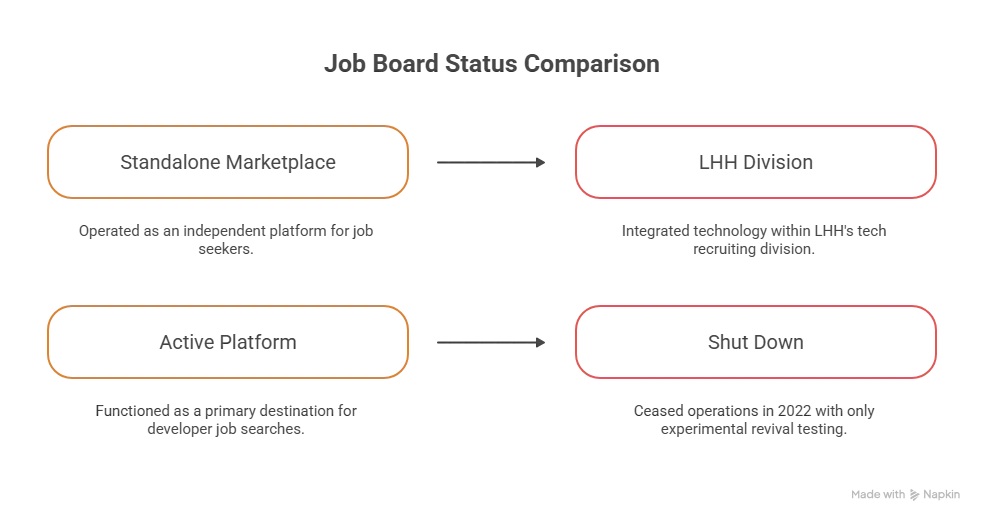
Some old recommendations still circulate. Hired no longer operates as a standalone marketplace, and its technology now sits inside LHH’s tech recruiting division. Stack Overflow Jobs shut down in 2022, although one 2026 roundup says a revival is being tested. I would not build a search plan around either.
Specialty Sites for Clearances, Visas, and Remote Work
Security Clearance Roles
If you hold an active federal clearance, add ClearanceJobs to your rotation. It has served cleared professionals since 2002, and its homepage listed about 57,600 jobs from roughly 1,800 pre-screened employers. Coverage runs from Confidential to TS/SCI, and the strongest markets include the DC area, Tampa, and Colorado Springs. Pair it with USAJOBS for federal civilian roles.
H-1B and OPT Candidates
Sponsorship language is messy. One employer writes that visa sponsorship is available. Another requires authorization without current or future sponsorship. A third says nothing but has filed petitions before. Use the work authorization filters on Dice and the visa filter on Wellfound, then check the company’s petition history. A past filing is a signal, not a promise, because sponsorship gets decided job by job.
Remote vs On-Site Reality
Expect fewer remote roles than you want. Robert Half analyzed postings across the professional fields it tracks and found that 87% of new postings in the second quarter of 2026 were fully on-site, 10% hybrid, and 3% fully remote. Remote roles still attract crowds, and LinkedIn data from 2024 showed remote-eligible postings drew about 46% of applications. Hybrid is the realistic target for most people.
Ghost Jobs: How to Stop Wasting Applications
Not every posting is a real opening. Greenhouse found that 18% to 22% of postings on its platform were ghost jobs in a recent quarter, and one analysis flagged 27.4% of US LinkedIn listings as likely ghosts in January 2026. Definitions differ, so read those numbers as a range, not a verdict.
Run four quick checks before you apply:
Why Referrals and Career Pages Beat Job Boards
Ashby’s hiring data shows customers needed 291 applications per hire in the first quarter of 2026, up from roughly 100 in early 2021. Its analysis of nearly 250,000 hires also puts referrals at about 18% of hires from roughly 1% of applications.
Other studies put the referral share of hires between 30% and 50%, so the exact figure depends on the dataset. The direction does not change. Referred candidates win more often.
So use boards to find targets, then go around the line. Message an employee, ask for a referral, and apply on the company site.
Which Sites to Use for Your Role
Cloud and DevOps
Search LinkedIn and Dice for exact titles like cloud engineer, DevOps engineer, and site reliability engineer. CompTIA’s August 2026 data, built on Lightcast postings, counted 18,067 DevOps engineer openings and 33,910 for systems engineers. Certifications can sharpen a profile, so check which ones pay off in these guides to Azure certifications that boost salary in the US and AWS certifications that boost salary. Weighing training routes? Compare a cloud bootcamp vs degree. When you want the long climb, the cloud architect career guide maps it.
Cybersecurity
Use Dice, LinkedIn, and ClearanceJobs, and add ClearedJobs.Net with its CyberSecJobs board if you hold a clearance. If you are breaking in, start with this guide to becoming a cybersecurity analyst without a degree, then map the steps in the cybersecurity career path. For leadership roles, Ladders focuses on $100K+ jobs, and the CISO salary guide shows what that level pays.
Data
CompTIA counted 18,725 data analyst postings in August 2026. Pay swings by metro, so run the numbers with this data scientist salary by city comparison before you pick where to apply.
New Graduates
Entry-level roles made up just 4.5% of software postings, so lean on referrals and campus connections. Widen your title search to support, systems, and junior analyst roles. Tech support specialist drew 25,215 postings in August 2026.
A Simple Weekly Routine for an Active Search
Quality beats volume. A few tailored applications with a referral behind them tend to beat two hundred blind submissions.
Keep your profile ready before you start. Mirror the exact job title, tools, and certifications from the posting in your headline and resume, since recruiters search by those terms. Add a pay range to your preferences wherever the site allows it.

Frequently Asked Questions
-
What is the best job search website for IT professionals?
LinkedIn and Indeed give the widest reach, and Dice gives the most tech-specific focus. Most people do best with one broad site, one specialist, and direct applications through company career pages.
-
Is Dice still worth using in 2026?
Yes, for tech-only roles and contract work. A 2026 roundup counted more than 70,000 openings in September, and Dice offers work authorization filters. Pair it with LinkedIn for networking.
-
Which job board is best for remote IT jobs?
Start with the remote filters on LinkedIn and Wellfound. Remote roles are scarce, since Robert Half reported only 3% of new postings in the professional fields it tracks as fully remote in the second quarter of 2026, so consider hybrid roles too.
-
Are ghost jobs common on tech job boards?
Studies vary. Greenhouse found 18% to 22% of postings on its platform were ghost jobs, and one analysis flagged 27.4% of US LinkedIn listings in January 2026. Check the posting date and the company career page before you apply.
-
How many job boards should I use?
Three or four is plenty. Pick one broad site, one tech-specific site, and one niche site for clearances, startups, or your city, then add company career pages.
Share Your Experience
Which site actually got you interviews this year? Did a referral beat a hundred applications for you, or did a ghost job eat a week? Share your story in the comments, because real search stories help other IT professionals more than any ranking.
How This Article Was Created
I pulled data from CompTIA, Indeed Hiring Lab, the Bureau of Labor Statistics, Robert Half, Greenhouse, Ashby, Levels.fyi, Wellfound, Dice, and ClearanceJobs, plus 2026 job board roundups for feature comparisons. Figures cover roughly January to October 2026, except BLS wage data from May 2024. I did not invent any numbers. Where studies disagree, I show the range. This article exists to inform job seekers, not to recruit or advertise. Listing counts and features change often, so confirm details on each site.

Shahzada Muhammad Ali Qureshi (Leeo)
I’m Shahzada — a software engineer by education and an SEO professional by trade. I built WhatIsTheSalary.com to go beyond just showing salary numbers — every page is manually researched across sources like BLS, Glassdoor, LinkedIn Salary, and PayScale to give you the full picture in one place. If you found what you were looking for here, that’s exactly the point.