TLDR
Best jobs for career changers in the US are not what most people think. You have spent years building skills in one field, and now you are staring at a job market that feels like it was designed for someone else. The industry you know is shrinking, the pay stopped growing, or the work simply stopped meaning anything. That feeling is not weakness. It is information.
The good news: 2026 is genuinely one of the better years to make this move. Skills-based hiring has replaced degree requirements across tech, healthcare, and business. Employers are actively recruiting people who bring cross-industry perspective, not filtering them out.
This guide breaks down the roles paying $80K to $130K+ that are built for people exactly like you. And if you want to benchmark what any of these careers actually pay before you commit, whatisthesalary.com is worth bookmarking now.
Why 2026 Is the Right Time to Change Careers
I will be direct with you: changing careers used to feel like a gamble. You would leave a stable job, spend a year retooling, and hope the new field was still hiring by the time you finished.
That calculation has changed. AI tools, a wave of tech layoffs, and a broad shift toward skills-based hiring have created an unusual moment where motivated career changers are actively being recruited, not just tolerated.
According to the Burning Glass Institute, millions of jobs that once required a bachelor’s degree have been opened to candidates without one since 2017. That trend accelerated through 2025 and 2026. LinkedIn data projects the US economy will add 6.7 million jobs by 2033, with the fastest-growing roles sitting in tech, healthcare, and green energy.
These are not niche opportunities. They are mainstream fields actively hiring people from completely different industries. The question is which one fits your background, timeline, and financial needs.
Best Career Change Jobs in 2026: At a Glance
Here is a quick comparison of the most accessible and high-paying career pivots for US job seekers in 2026, based on Bureau of Labor Statistics projections and current salary data:
| Job Title | Entry Salary | Mid-Level Salary | BLS Growth | Degree Needed? |
| Cybersecurity Analyst | $55,000–$75,000 | $112,000–$124,910 | 28.5% | No (certs work) |
| Data Scientist | $65,000–$85,000 | $108,000–$160,000+ | 33.5% | No (bootcamp/cert) |
| Data Analyst | $52,000–$70,000 | $82,640–$115,000 | 23% | No |
| Cloud Engineer | $70,000–$90,000 | $100,000–$130,000 | High | No (AWS/Azure certs) |
| Project Manager | $62,000–$78,000 | $98,580–$120,000+ | 7% | No (PMP cert) |
| UX/UI Designer | $60,000–$80,000 | $100,000–$130,000 | Steady | No (portfolio) |
| Digital Marketing | $40,000–$55,000 | $70,000–$100,000 | Growing | No (Google/Meta certs) |
| Software Developer | $65,000–$90,000 | $130,000–$147,000 | 15.8% | No (bootcamp) |
| Healthcare Admin | $45,000–$60,000 | $80,000–$110,000 | Faster than avg | Certificate/Associate |
All salary ranges reflect US national data. City-level variation can push these figures significantly higher, particularly in tech hubs like San Francisco, Seattle, Austin, and New York.
1. Cybersecurity Analyst
If I had to pick one career built specifically for switchers in 2026, cybersecurity is it.
The Bureau of Labor Statistics projects 28.5% growth in information security analyst jobs between 2024 and 2034, adding approximately 52,100 new roles. The 2024 median annual wage sat at $124,910, and that number has trended upward.
What makes cybersecurity so accessible is that the entry path is certification-driven. The CompTIA Security+ exam costs around $400 and takes 3 to 6 months of prep for most people. That single cert opens doors at mid-size companies, government contractors, and managed security service providers.
Former teachers, military veterans, law enforcement officers, and IT helpdesk workers all move into cybersecurity regularly. The field values analytical thinking, attention to detail, and calm under pressure. Those are not tech-specific skills; they come from lots of other professions.
Thinking about making this move? Our guide on becoming a cybersecurity analyst without a degree covers every realistic entry path in detail.
And once you’re in, the progression is clear: SOC analyst, security engineer, senior security engineer, then security architect or the CISO track. If you want the full picture of what that looks like year by year, the cybersecurity career path guide walks through it step by step.

2. Data Scientist and Data Analyst
Data roles are the most common landing spot for people switching out of finance, marketing, education, or business operations, and that makes sense. Most of these professionals already work with data every day. They just need to formalize and deepen those skills.
A data analyst at entry level earns between $52,000 and $82,640 depending on location and industry. Data scientists earn more, with a national median around $108,000 and senior roles reaching $160,000 or higher.
The BLS projects data scientist employment to grow 33.5% from 2024 to 2034, adding roughly 82,500 jobs. That is one of the strongest hiring trends in the entire US economy right now, not a niche opportunity.
Salary also varies a lot depending on where you work. Someone doing the same data scientist role in San Francisco earns quite differently than someone in Columbus or Dallas. The data scientist salary by city breakdown shows exactly what those differences look like across major US metros.
The tools to learn first: Python, SQL, and either Tableau or Power BI. Most people get job-ready within 6 months using a structured bootcamp or the Google Data Analytics certificate.
3. Cloud Engineer
Cloud is one of the rare fields where a motivated career changer with 6 to 12 months of focused study can land a junior role at a real company.
Cloud infrastructure now runs every major industry: financial services, healthcare, retail, logistics. That means hiring is not concentrated in Silicon Valley anymore. It is everywhere. An entry-level cloud engineer earns $70,000 to $90,000. With two to three years of experience and AWS or Azure certification, you are looking at $100,000 to $130,000.
One decision career changers wrestle with is whether to do a bootcamp or self-study. Both paths have real trade-offs. The cloud bootcamp vs. self-study comparison goes through actual cost, timeline, and outcome differences so you can figure out what fits your situation.
4. Project Manager
Project management is the career change that doesn’t feel like starting over.
If you have ever run a team, coordinated a launch, managed a budget, or led a cross-functional initiative in any role or industry, you are already doing project management. The PMP certification from PMI formalizes it and opens the door to roles that pay significantly more.
Median project manager salary sits at $98,580 according to BLS data. Experienced PMs with PMP certification in tech or pharmaceutical companies frequently earn $120,000 or more.
The other reason this works for career changers: it is industry-agnostic. You can move from healthcare to tech to construction within the same career track. Your background in one industry actually makes you more valuable in another, not less.
5. UX/UI Designer
UX design has one of the most welcoming communities for career changers in the entire tech world.
Psychologists, teachers, marketers, writers, and product managers all regularly make this transition. The core UX skill set involves understanding people, organizing information, and communicating clearly. Those are not tech-specific skills; most experienced professionals already have them.
Entry-level UX salaries in the US range from $60,000 to $80,000. Senior UX designers earn $100,000 to $130,000+, with top tech companies paying significantly more.
A portfolio matters more than a degree here. Employers evaluate candidates on their design thinking process, user research methods, and the quality of their case studies. You build that portfolio through freelance projects, redesign challenges, or volunteer work, not just coursework.
6. Digital Marketing Specialist
Digital marketing is one of the most accessible career pivots for people with communication, writing, or business backgrounds, and it offers the most remote flexibility of any role on this list.
SEO, paid search, social media marketing, email campaigns, and content strategy are all learnable skills. Many platforms offer free or low-cost training: Google’s certifications, HubSpot Academy, and Meta Blueprint are all credentials employers recognize in US hiring.
Entry-level digital marketing roles start around $40,000 to $55,000. Specialists in paid advertising or SEO with 3 to 5 years of experience earn $70,000 to $100,000. Marketing directors and senior strategists frequently reach $130,000 or more.
7. Healthcare Administration
Not everyone wants to work in tech, and healthcare administration is one of the strongest options for career changers who want stability, purpose, and competitive pay without going back to school for years.
Medical billing specialists, health services managers, and healthcare operations coordinators are all in high demand. The BLS projects health services manager employment to grow faster than the average for all occupations through 2034.
The entry path usually involves a certificate program or an associate’s degree. People coming from customer service, office management, insurance, or finance fit naturally into this field. The transfer of skills is intuitive, not forced.
How to Actually Get Hired as a Career Changer
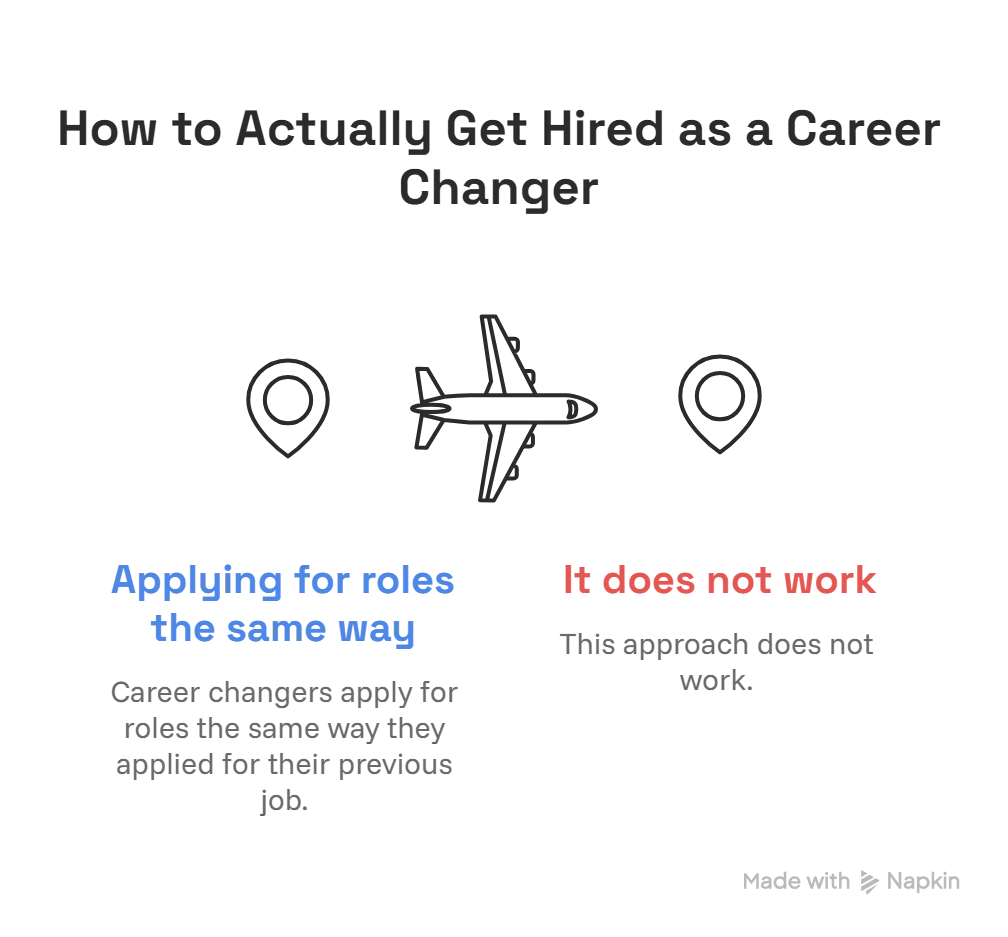
The biggest mistake career changers make is applying for roles the same way they applied for their previous job. It does not work.
Fix Your Resume First
Employers looking at a career changer’s application want to see how your past experience applies to the new role. That means leading with transferable skills, not job titles. And before you format anything, understand the difference between a US resume vs. CV and what employers actually expect. It is a surprisingly important distinction that trips up a lot of people.
Understand How Screening Works
Most large US companies run applications through automated screening software before any human reads your resume. If your resume doesn’t use the right keywords from the job posting, it gets filtered out instantly. The guide on how ATS filters work in US job applications explains exactly what gets flagged and how to write through it.
Prepare Differently for the Interview
A career changer’s interview is usually more about why you switched than what you know. Behavioral questions dominate these conversations. Answers like “I wanted a new challenge” do not land well with experienced interviewers. You need to frame your story around value, not enthusiasm. The behavioral interview questions and answers guide covers the specific question types you will face and how to structure your responses in a way that actually works.
It also helps to know how tech companies specifically structure their hiring process before you walk in. The US tech interview process breaks down exactly what to expect from phone screens to onsite rounds, so nothing surprises you.
And one thing that often gets overlooked: how you show up to an in-person interview still matters. What to wear and say at a US job interview covers the unspoken expectations that trip up a lot of career changers who are sharp on skills but unfamiliar with US professional norms.
What Salary Should You Expect as a Career Changer?
Expect a temporary step down at first. This is real, and there is no point pretending otherwise. Most career changers enter their new field at a salary that is 10% to 30% lower than what they earned at their previous seniority level.
The good news: recovery is fast. In tech fields like cybersecurity and data science, most career changers return to or exceed their previous income within 2 to 3 years. Project management and cloud engineering follow a similar curve.
Digital marketing and UX design take slightly longer, but both offer strong upside at the mid-senior level. Healthcare administration has the slowest salary growth but also the most stable floor, which matters depending on your situation.
Common Mistakes Career Changers Make in 2026

Frequently Asked Questions
-
What is the easiest career to switch to in the US in 2026?
Project management and digital marketing are among the most accessible transitions because they build on communication, coordination, and business skills that transfer from many existing careers. Both fields have clear certification paths that hiring managers recognize and both offer remote-friendly roles.
-
Can I change careers at 40 in the US?
Yes, and in many ways professionals over 40 have an advantage. They bring industry experience, professional maturity, and a track record that recent graduates cannot match. The key is positioning that experience as an asset for the new role rather than competing with entry-level candidates on their own terms.
-
How long does a career change realistically take?
Most career changers reach a hirable skill level in their new field within 6 to 18 months if they study consistently and build a portfolio or relevant credentials. Tech fields with certification paths like cybersecurity and cloud tend to move faster. Healthcare roles that require clinical licensure take longer.
-
Do I need a new degree to change careers?
For most of the roles on this list, no. Certifications, bootcamp credentials, and demonstrated portfolio work carry more weight with US employers than a second bachelor’s degree. The exception is healthcare roles that require clinical licensure, such as nursing or physical therapy.
-
Which career change pays the most?
Cybersecurity and data science offer the highest salary ceilings for career changers in 2026. Experienced professionals in both fields earn $120,000 to $160,000 or more. Cloud engineering and software development follow closely behind, particularly in tech-dense metros like Seattle, Austin, and New York.
-
Is it worth taking a pay cut to change careers?
For most people in growing fields, yes. A temporary income dip of 10% to 25% at entry level is common. But in fields like cybersecurity, data science, and cloud, mid-level compensation typically surpasses the previous career’s ceiling within 3 years. The long-term math usually works out.
How This Article Was Created
Salary figures in this article are sourced from the Bureau of Labor Statistics (BLS), Glassdoor (April 2026), DegreeCalc (April 2026), and Coursera’s career data. No figures were fabricated. All data reflects conditions as of late 2026. This article was written to inform job seekers and career changers, not to recruit or advertise on behalf of any employer or platform.

Shahzada Muhammad Ali Qureshi (Leeo)
I’m Shahzada — a software engineer by education and an SEO professional by trade. I built WhatIsTheSalary.com to go beyond just showing salary numbers — every page is manually researched across sources like BLS, Glassdoor, LinkedIn Salary, and PayScale to give you the full picture in one place. If you found what you were looking for here, that’s exactly the point.